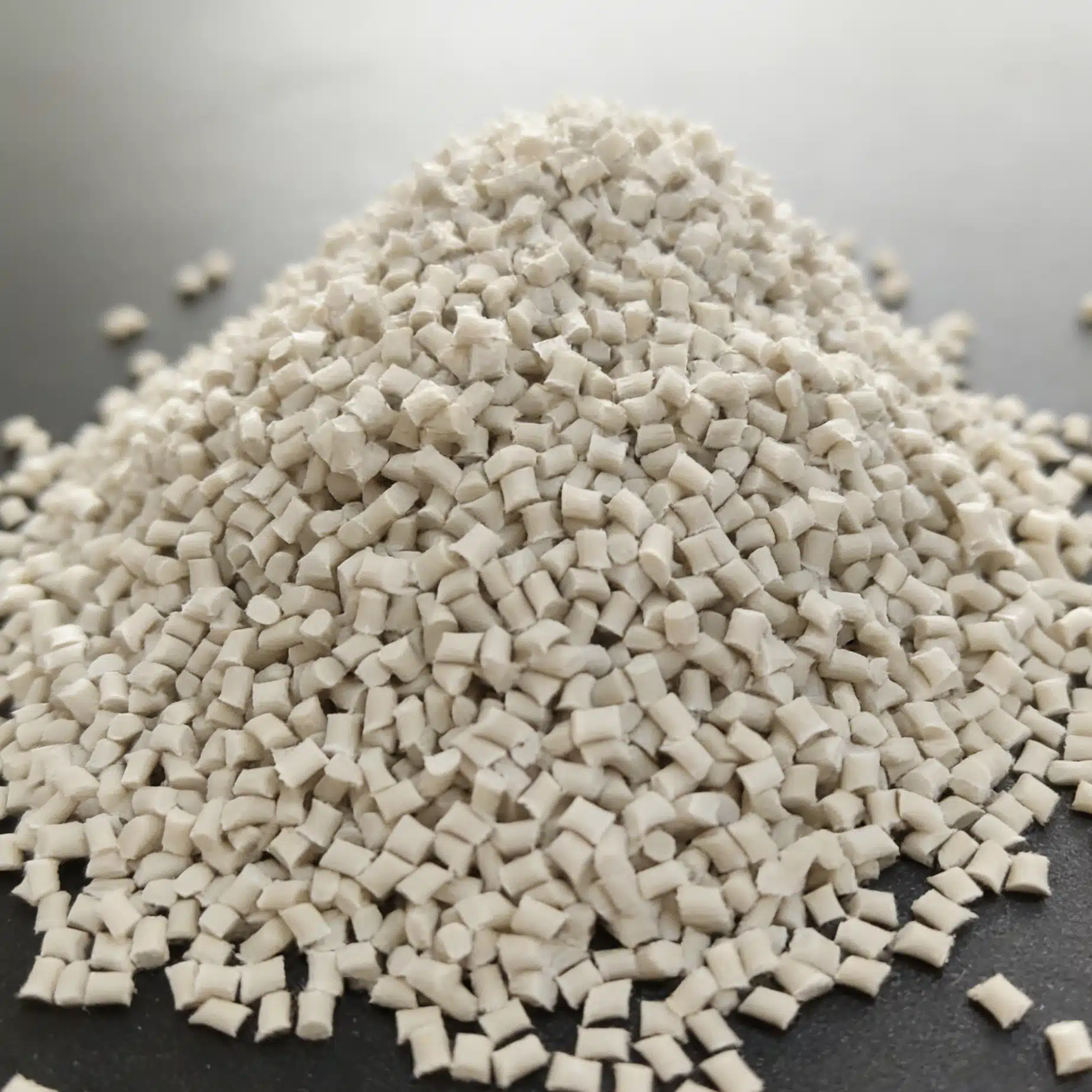
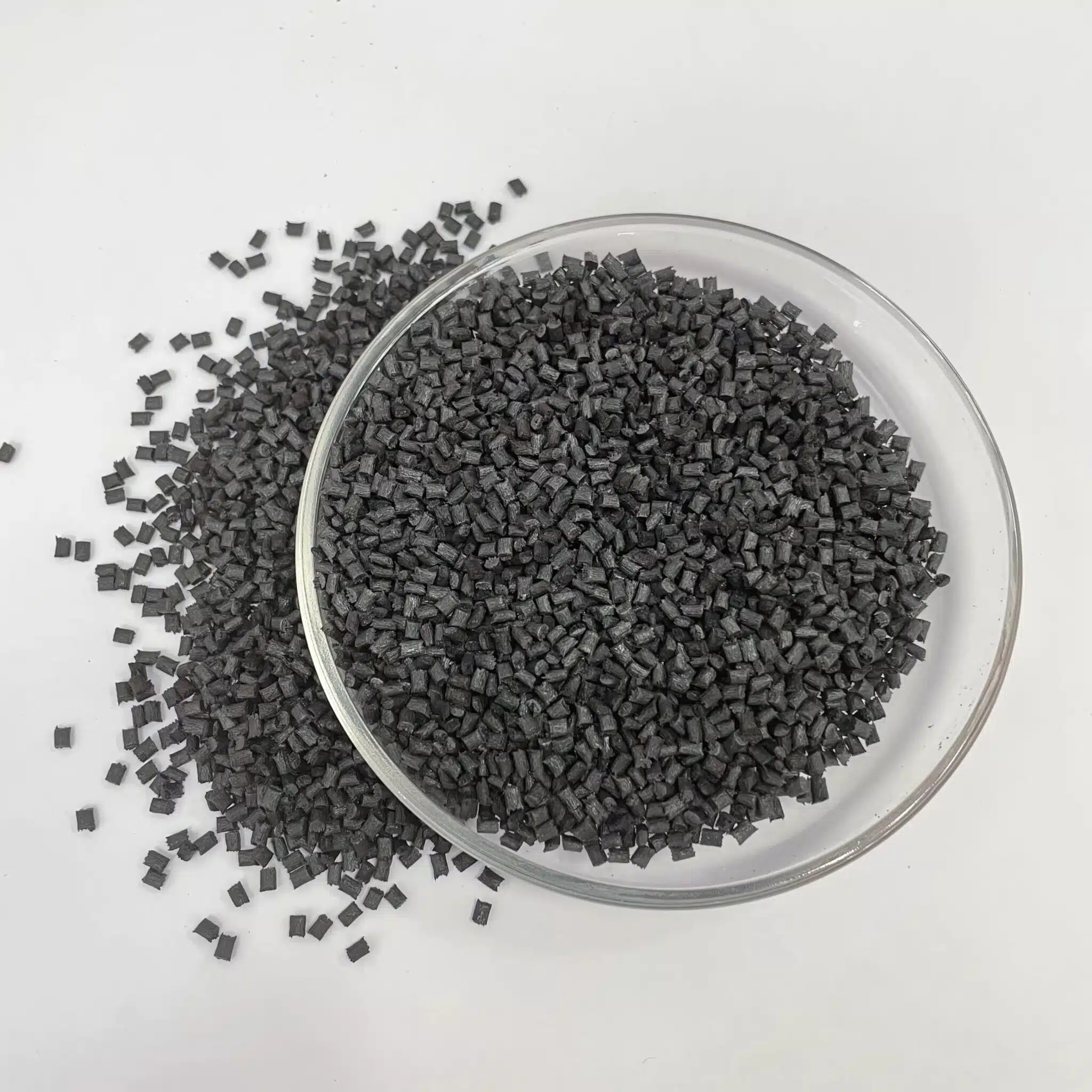
Toughened PA66 Compounds for Impact-Loaded Structural Parts
Toughened PA66 is developed for injection-molded components that require better resistance to impact, vibration, assembly stress and crack propagation than standard nylon 66. Through impact modification, PA66 can achieve improved toughness while retaining the heat resistance and structural performance required for automotive, electrical and industrial parts.
Yongjuxing supplies impact modified PA66 for applications where standard PA66 or highly reinforced nylon may become too brittle under shock or repeated mechanical loading. Current formulations can combine impact modification with glass fiber reinforcement, providing a practical balance between toughness, stiffness and dimensional stability for structural components.
If maximum rigidity and heat resistance are more important than impact performance, compare our glass filled PA66 compounds. For applications where lower processing temperature or a different toughness balance is required, see our toughened PA6 compounds.
How to Select a Toughened PA66 Grade
The correct toughened nylon 66 grade should be selected according to the actual failure mode of the molded part. Drop-test failure, snap-fit cracking and vibration fatigue require a different material balance from a load-bearing structural component that must remain rigid at elevated temperatures.
Impact Modified PA66
Standard impact modified PA66 is suitable when toughness, crack resistance and deformation before failure are the primary requirements. It can be considered for clips, fasteners, protective housings and other components exposed to assembly stress or repeated impact.
- Improved resistance to sudden mechanical shock
- Better crack resistance around clips, snap-fits and fastening points
- Suitable for parts subject to vibration or repeated impact
- Can be formulated for improved low-temperature toughness when required
Reinforced Toughened PA66
Reinforced toughened PA66 combines glass fiber reinforcement with impact modification. This type of formulation is suitable when a component needs greater toughness than conventional glass filled PA66 but cannot sacrifice the stiffness, load-bearing capability and dimensional stability required for structural use.
- Suitable for automotive brackets, pedals and structural housings
- Provides a better balance between rigidity and impact resistance
- Useful where conventional glass fiber reinforced PA66 is too brittle
- Suitable for power-tool housings and industrial components exposed to both load and shock
If the application primarily requires low friction and wear resistance rather than impact modification, see our self-lubricating and wear-resistant nylon compounds.
Impact Resistance vs. Stiffness: Choosing the Right Balance
Increasing toughness does not improve every PA66 property at the same time. A high impact PA66 formulation is normally developed by balancing impact resistance, elongation, stiffness, heat resistance and processing behavior according to the end-use requirement.
| Material Requirement |
Recommended Direction |
Typical Use |
| Maximum impact resistance |
Higher impact modification with lower emphasis on rigidity |
Clips, snap-fits, safety parts and drop-resistant housings |
| Low-temperature toughness |
Low-temperature impact modified PA66 |
Outdoor, automotive and cold-environment components |
| High stiffness + impact resistance |
Glass fiber reinforced toughened PA66 |
Automotive brackets, pedals, structural housings and machinery parts |
| Maximum rigidity and dimensional stability |
Standard glass filled PA66 |
Load-bearing and high-temperature structural components |
| Low friction and wear resistance |
Self-lubricating PA66 |
Gears, bushings, sliders and moving mechanical parts |
How Impact Modification Changes PA66 Performance
The purpose of impact resistant PA66 is to reduce brittle failure under mechanical stress. As the level of toughening increases, impact performance and ductility generally improve, while stiffness and heat resistance may need to be balanced through reinforcement or other formulation adjustments.
| Property |
General Effect of Toughening |
Selection Consideration |
| Impact Resistance |
Increases |
Important for drops, shock and collision loads |
| Low-Temperature Toughness |
Can improve significantly |
Important for outdoor and cold-environment applications |
| Elongation |
Generally increases |
Reduces risk of brittle fracture |
| Crack Resistance |
Improves |
Useful around screw bosses, snap-fits and assembly points |
| Stiffness |
May decrease |
Glass fiber reinforcement can be used when greater rigidity is required |
| Tensile Strength |
Depends on formulation |
Must be evaluated together with impact performance for structural parts |
| Heat Resistance |
Depends on modifier and reinforcement system |
Operating temperature and HDT should be confirmed before grade approval |
Toughened PA66 vs. Glass Filled PA66
Toughened PA66 and glass filled PA66 solve different material problems. The right choice depends on whether the component is failing because of insufficient rigidity or insufficient impact resistance.
| Selection Factor |
Toughened PA66 |
Glass Filled PA66 |
| Impact Resistance |
Higher |
Depends on glass fiber level and formulation |
| Crack Resistance |
Better suited to shock and assembly stress |
More focused on structural rigidity |
| Stiffness |
Depends on toughening and reinforcement |
Generally higher |
| Dimensional Stability |
Good in reinforced toughened grades |
Generally excellent with higher glass fiber content |
| Typical Selection |
Impact-loaded structural components |
Rigid, load-bearing and heat-resistant components |
Choose impact modified PA66 when the part suffers from cracking, drop failure, vibration fatigue or brittle fracture. If the main problem is deformation, insufficient modulus or dimensional instability, evaluate our glass fiber reinforced PA66. Where both impact resistance and structural rigidity are required, a reinforced toughened PA66 formulation can provide a more balanced solution.
Typical Applications of High Impact PA66
- Automotive: pedals, clips, fasteners, structural brackets, protective housings and vibration-loaded components.
- Power Tools: housings, handles, internal supports and covers exposed to repeated shock or drop impact.
- Electrical Equipment: structural housings, snap-fit components and parts subject to mechanical assembly stress.
- Industrial Machinery: guards, brackets, covers and structural components requiring both toughness and rigidity.
- Outdoor Equipment: molded parts requiring improved resistance to impact under changing temperature conditions.
For electrical parts that also require flame resistance, refer to our flame retardant nylon compounds. For conductive or ESD requirements, see conductive and anti-static nylon.
Custom Toughened PA66 Compounds
Yongjuxing can adjust toughened PA66 granules according to the mechanical, thermal and processing requirements of the molded component. Material selection should focus on the complete impact–stiffness balance rather than a single impact value.
- Room-temperature impact resistance
- Low-temperature impact performance
- Elongation and crack resistance
- Glass fiber reinforcement level
- Stiffness and tensile strength
- Heat stabilization
- UV and weather resistance
- Flow characteristics for injection molding
- Dimensional stability and shrinkage
- Color and application-specific modification
For material matching, send your current grade or TDS, application, operating temperature, required impact performance, stiffness requirement and current failure problem. Contact Yongjuxing to discuss a suitable impact modified PA66 grade or request material for injection-molding trials.