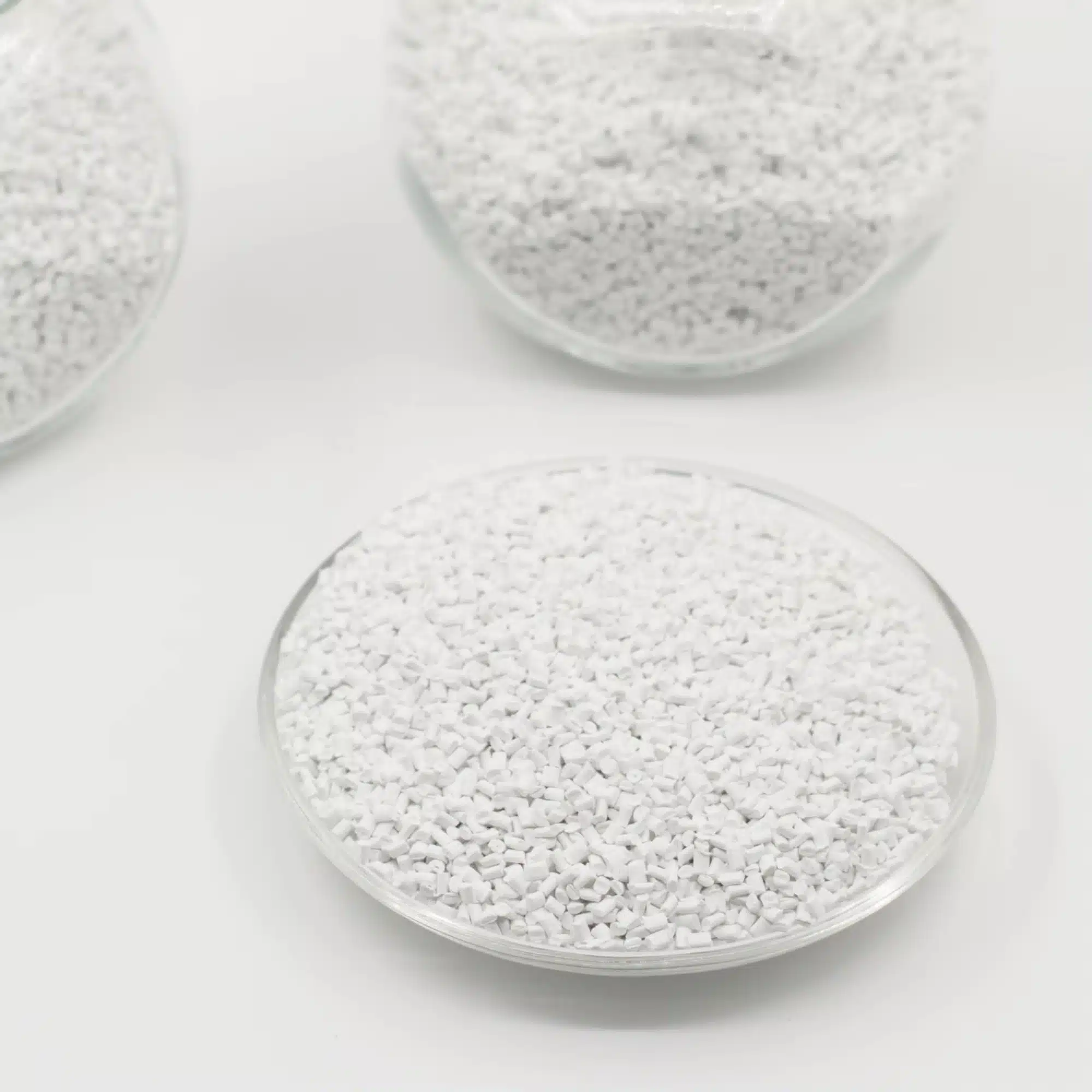
Glass Filled PA6 Compounds for Injection Molding
Glass filled PA6 is designed for injection-molded parts that require higher stiffness, mechanical strength, heat resistance and dimensional stability than unreinforced polyamide 6. By reinforcing PA6 with glass fiber, the material can better withstand structural loads and elevated temperatures while maintaining the processing advantages of nylon 6.
Yongjuxing supplies glass fiber reinforced PA6 for automotive components, electrical housings, industrial machinery, power tools and other structural applications. Available grades include standard glass filled nylon 6, UV-stabilized PA6 GF30 and functional reinforced PA6 for applications requiring additional thermal performance. Glass fiber content, color and functional modification can also be adjusted according to molding and end-use requirements.
For applications where impact resistance is more important than maximum rigidity, see our toughened PA6 compounds. For higher-temperature reinforced parts, you can also compare our glass filled PA66 compounds.
Available Glass Fiber Reinforced PA6 Grades
The right glass filled PA6 grade depends on the required stiffness, heat resistance, outdoor exposure and functional requirements of the molded component. Our current reinforced polyamide 6 portfolio includes the following options:
| Grade |
Reinforcement / Function |
Typical Performance |
Suitable Applications |
| Standard Glass Filled PA6 |
15% glass fiber |
Tensile strength: 120 MPa
Flexural modulus: 6000 MPa
HDT at 1.8 MPa: 190°C |
General structural parts, housings, brackets, machinery components and molded industrial parts |
| UV Resistant PA6 GF30 |
30% glass fiber + UV stabilization |
Tensile strength: 160 MPa
Flexural modulus: 8000 MPa
HDT at 1.8 MPa: 200°C |
Outdoor automotive parts, electrical housings and components exposed to sunlight or weather |
| Thermal Conductive PA6 GF35 |
Glass fiber reinforced functional grade |
High rigidity, dimensional stability and enhanced thermal-management performance |
Electrical components, lighting parts, machinery housings and applications requiring heat dissipation |
If your project requires flame resistance, electrical conductivity or other specialized properties, different functional packages can be evaluated separately. See our flame retardant nylon and conductive and anti-static nylon ranges for these requirements.
How to Select the Glass Fiber Content in PA6
Increasing the glass fiber content generally increases the stiffness, strength and dimensional stability of glass fiber reinforced PA6, but the highest reinforcement level is not automatically the best choice. Mold geometry, surface requirements, impact load and processing conditions should all be considered before selecting a grade.
Lower Glass Fiber Content
- Better balance between rigidity and toughness.
- Usually easier to mold than highly reinforced grades.
- Better suited to components where surface appearance and moderate structural strength are both important.
- Suitable for general housings, handles, brackets and industrial components.
PA6 GF30
- Provides a practical balance of stiffness, tensile strength and heat resistance for structural injection molding.
- Commonly considered for automotive, electrical, power-tool and machinery components.
- Can be combined with UV, heat-stabilization or other modification packages when the operating environment requires additional performance.
Higher Glass Fiber Content
- Selected when greater rigidity, lower deformation and higher load-bearing capability are priorities.
- Useful for structural components where dimensional stability is more important than surface appearance or impact flexibility.
- Mold design, gate position, fiber orientation and equipment wear should be reviewed carefully when processing highly reinforced PA6.
If the molded component must retain greater impact resistance, increasing glass fiber content may not be the only solution. A toughened PA6 or a customized reinforced-and-toughened formulation may provide a better performance balance.
Typical Properties of Our Glass Filled PA6 Grades
The following values are examples from current Yongjuxing glass filled nylon 6 grades. Actual properties vary according to glass fiber content, stabilizer package and other functional additives. The final grade should therefore be selected according to the required mechanical, thermal and environmental performance rather than glass fiber percentage alone.
| Property |
Standard PA6 Glass Fiber Grade |
UV Resistant PA6 GF30 |
Test Standard |
| Glass Fiber Content |
15% |
30% |
ISO 3451 |
| Tensile Strength |
120 MPa |
160 MPa |
ISO 527-2 |
| Flexural Modulus |
6000 MPa |
8000 MPa |
ISO 178 |
| Notched Impact Strength |
8 kJ/m² |
12 kJ/m² |
ISO 180 |
| Water Absorption, 23°C / 24 h |
1.2% |
1.0% |
ISO 62 |
| HDT at 1.8 MPa |
190°C |
200°C |
ISO 75 |
| Melting Temperature |
220°C |
220°C |
ISO 11375 |
These values are typical grade data rather than specifications for every glass filled PA6 compound. For material approval, request the TDS for the selected grade or send us the specification of your current material for comparison.
PA6 GF30 vs. PA66 GF30: Which One Should You Use?
Both PA6 GF30 and PA66 GF30 are widely used glass fiber reinforced polyamides, but the material should be selected according to the operating temperature, mechanical requirements, molding conditions and cost target of the component.
| Selection Factor |
PA6 GF30 |
PA66 GF30 |
| Structural Strength |
High strength and rigidity for general structural parts |
Suitable for structural parts requiring higher thermal performance |
| Processing |
Generally processed at a lower melt temperature |
Requires a higher processing temperature |
| Heat Resistance |
Suitable for many automotive, electrical and industrial applications |
Often selected when higher-temperature performance is a priority |
| Moisture |
Moisture conditioning and dimensional change should be considered |
Moisture effects should also be considered during material selection |
| Typical Selection |
Balanced structural performance, processability and material cost |
Higher-temperature structural and electrical components |
For parts that do not require the higher thermal capability of PA66, PA6 GF30 can provide an effective balance of strength, stiffness and processing performance. If the component operates at higher temperatures or requires greater high-temperature rigidity, compare it with our PA66 glass filled compounds.
Injection Molding Guidelines for Glass Filled PA6
PA6 is hygroscopic, so proper drying is important before injection molding. Excess moisture can affect surface quality, mechanical performance and processing stability. Processing parameters should always be adjusted according to the selected reinforced PA6 grade, mold structure and injection molding equipment.
For the current UV-resistant PA6 GF30 grade, the reference processing window includes:
- Drying temperature: 80–120°C
- Drying time: 2–6 hours
- Melt temperature: 230–270°C
- Nozzle temperature: 245–270°C
- Mold temperature: 80–120°C
Highly reinforced glass filled nylon 6 also requires attention to fiber orientation, gate design and abrasive wear on screws, barrels and mold surfaces. For production trials, we recommend confirming the processing window from the TDS of the selected grade rather than applying one setting to all glass filled PA6 materials.
Need a Glass Filled PA6 Grade for an Existing Project?
Send us your current material grade, TDS or target performance requirements. We can evaluate the required glass fiber content, mechanical strength, heat resistance, UV stability, color and other modification requirements and recommend a suitable glass fiber reinforced PA6 compound for injection molding.
For projects requiring an existing-grade replacement, please provide the application, operating temperature, required glass fiber percentage, mechanical requirements, color and monthly consumption. Contact Yongjuxing to request a sample or discuss a custom PA6 compound.