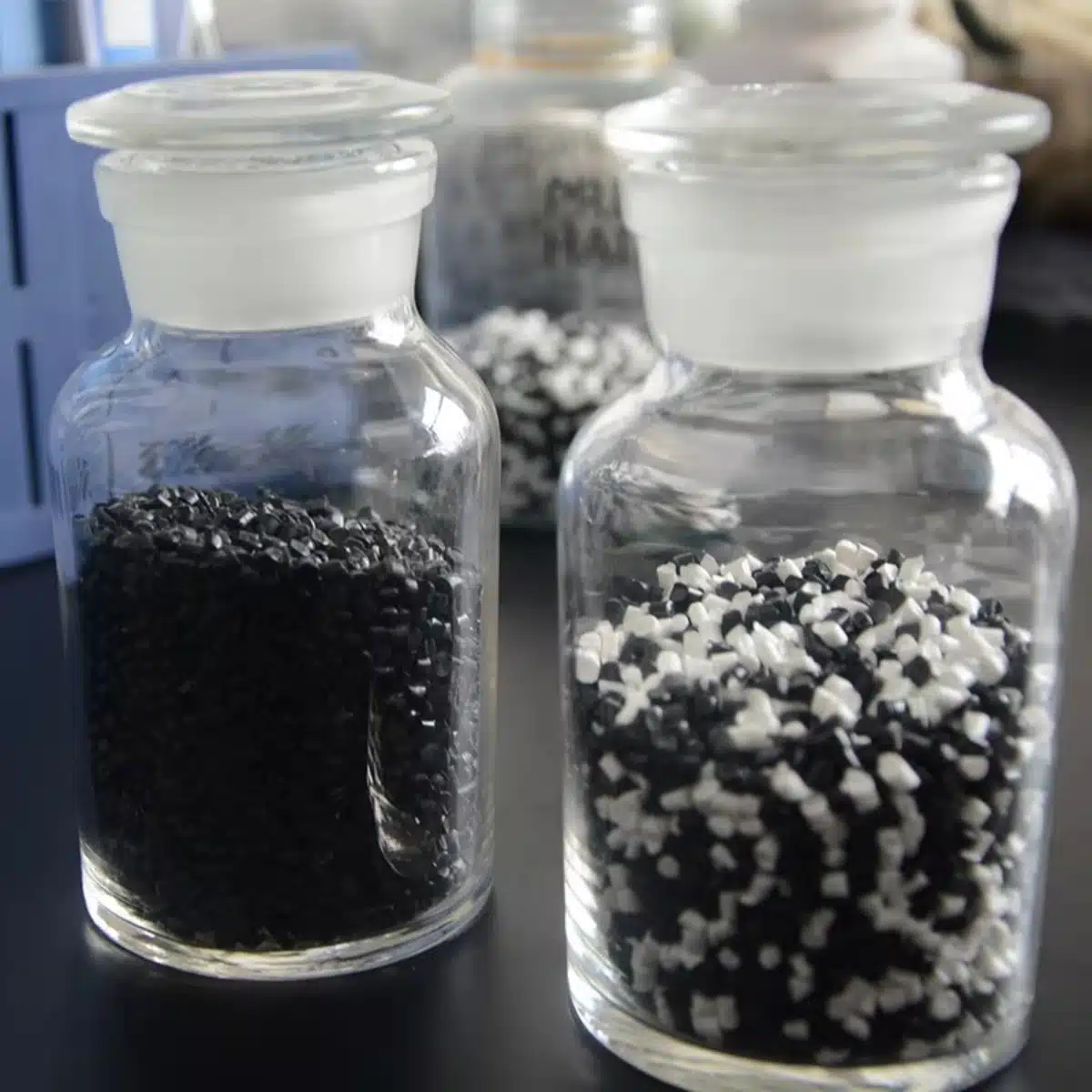
Amid the rapid development of the electrical and electronic industry, from micro connectors to large circuit breakers, and from consumer electronics casings to high-voltage components in new energy vehicles, the fire safety performance of materials directly determines product reliability and the safety of users' lives and property. As a core material integrating "electrical insulation, mechanical strength, and fire resistance," flame-retardant nylon has become a "safety barrier" in the electrical and electronic field. Its market scale is second only to the automotive sector, making it the second-largest application scenario for modified nylon. This article starts with the necessity of flame retardancy, systematically popularizes the core UL94 standards, compares the differences between halogenated and halogen-free environmentally friendly flame-retardant technologies, and provides professional references for material selection in the electrical and electronic industry through typical application cases.
I. Why Is "Flame Retardancy" the "Lifeline" of Electrical and Electronic Products?
During operation, electrical and electronic products face three major fire risks:
- Localized high temperatures (up to 800-1200℃) from short circuits and overloads—these can easily ignite surrounding insulating materials;
- Thermal runaway in components such as capacitors and batteries, which may trigger cascading combustion;
- Leakage-induced fires resulting from material aging and degraded insulation performance after long-term use.

The core value of fire-resistant plastics like flame-retardant nylon lies in building a safety defense line by inhibiting the combustion process and reducing fire hazards, specifically reflected in three dimensions:
1. Reducing the Probability of Fire Occurrence
Electrical and electronic components (such as connectors and coil bobbins) operate in electrified, high-temperature environments for a long time. Ordinary nylon softens above 150℃ and burns continuously when exposed to open flames. In contrast, flame-retardant nylon can self-extinguish quickly upon contact with fire sources—for example, UL94 V-0 grade materials extinguish within 30 seconds after the 1000℃ flame is removed, preventing the spread of fire to other components. According to industry statistics from UL Laboratories, the fire rate of electronic devices using flame-retardant materials is 55%-65% lower than that of non-flame-retardant materials.
2. Reducing Toxic Hazards and Rescue Obstacles
80% of casualties in fires are caused by toxic smoke and suffocating gases. Combustion of halogenated flame-retardant materials generates corrosive gases including hydrogen chloride and hydrogen bromide—500 ppm concentrations can already cause respiratory burns. On the other hand, halogen-free flame-retardant nylon, equipped with a phosphorus-nitrogen synergistic flame-retardant system, has a maximum smoke density (Dₘₐₓ) ≤ 150 when burning (in compliance with GB/T 8627-2007) and produces no hydrogen halides, gaining precious time for personnel evacuation and fire rescue.
3. Meeting Mandatory Requirements of Global Regulations
Major global markets have established rigid standards for the flame-retardant performance of electrical and electronic materials: the EU RoHS Directive (2011/65/EU) restricts the use of brominated flame retardants such as decabromodiphenyl ether (DecaBDE) and tetrabromobisphenol A (TBBPA); China's GB 4943.1-2011 requires the casings of information technology equipment to pass UL94 V-0 grade testing; US UL certification is a "pass" for entering the North American market. Non-compliant products not only cannot be launched but may also face massive recalls—in 2024, a brand of laptops was recalled globally for 500,000 units due to insufficient flame-retardant grade of connectors, resulting in losses exceeding 1.2 billion RMB.
II. UL94 Standard: The "Measurement Benchmark" for Flame-Retardant Performance
UL94 (a plastic flame-retardant standard developed by Underwriters Laboratories) is the most authoritative material selection basis for the global electrical and electronic industry. Its core evaluates the combustion behavior of materials under small flames through "vertical burning tests." Among them, V-0, V-1, and V-2 grades are the mainstream requirements for electrical and electronic components. The differences between the three focus on two key indicators: burning time and dripping hazard.

The specific standards are shown in the table below:
| Flame-Retardant Grade | Core Test Conditions (Vertical Burning) | Burning Time Requirements | Dripping Requirements | Typical Application Scenarios |
|---|---|---|---|---|
| UL94 V-0 (Highest Grade) | Apply two 10-second bursts of 1000℃ flame (Bunsen burner) to 127mm×12.7mm samples | Total burning time for two bursts on a single sample ≤ 50s (≤25s per burst); Flameless combustion stops within 30s after flame removal | Drippings (including burning particles) shall not ignite cotton placed 12 inches (305mm) below | Mobile phone charger casings, high-voltage connectors, battery pack components |
| UL94 V-1 | Same test conditions as V-0 | Total burning time for two bursts on a single sample ≤ 250s (≤125s per burst); Flameless combustion stops within 30s after flame removal | Drippings shall not ignite cotton below | Printer casings, ordinary relay bases |
| UL94 V-2 | Same test conditions as V-0 | Same burning time requirements as V-1 | Drippings are allowed to ignite cotton, but cotton burning time ≤ 30s | Non-critical components of industrial control cabinets, low-power coil bobbins |
Clarification of Key Misconceptions
1. "Higher grade is better"? It needs to match the scenario: For example, if a household appliance casing uses 5VA grade (the highest UL94 grade, requiring 5 flame tests without penetration), the cost is 40% higher than V-0 grade, but there is no long-term exposure to open flames in actual use, which is "over-design." However, high-voltage connectors for new energy vehicles, involving high voltage (above 300V), must use V-0 grade and additionally meet the glow wire ignition temperature (GWIT) ≥ 775℃ in line with ISO 60695-2-13 standard.
2. Thickness affects grade determination: The flame-retardant grade of the same material decreases as thickness decreases. For example, a flame-retardant PA66 reaches V-0 grade at 3.2mm thickness but may only be V-1 grade at 0.8mm thin walls (such as micro connectors). During design, the test results at the "actual service thickness" shall prevail to avoid misleading "replacing thin with thick."
III. Halogenated vs. Halogen-Free: Technical Routes and Trends
The core difference between flame-retardant nylons lies in the type of flame retardant, divided into two major technical routes: halogenated flame retardancy (mainly brominated and chlorinated) and halogen-free flame retardancy (mainly phosphorus-based, nitrogen-based, and silicon-based). The two differ significantly in environmental friendliness, performance, and cost, which also determines the development direction of the industry.

1. Core Difference Comparison
| Comparison Dimension | Halogenated Flame-Retardant Nylon (Typical: Brominated) | Halogen-Free Flame-Retardant Nylon (Typical: Phosphorus-Nitrogen Synergistic) |
|---|---|---|
| Flame-Retardant Principle | Releases hydrogen halide gas during combustion to capture combustion free radicals and interrupt the chain reaction | Phosphorus-based flame retardants decompose to form phosphate coatings (isolating oxygen), and nitrogen-based flame retardants release non-combustible gases (diluting combustible gases), synergistically forming an expanded carbon layer |
| Environmental Friendliness | Burns to release dioxins (highly toxic, half-life up to 10 years) and hydrogen halide (corrosive); some brominated types are restricted by EU RoHS | No toxic gas emission, low maximum smoke density (Dₘₐₓ < 150), compliant with RoHS, REACH, and China's "Halogen-Free Directive" (halogen content ≤ 900ppm) |
| Mechanical Performance | Good compatibility with nylon, low addition amount (10%-15%), minimal impact on tensile strength (decrease ≤ 5%) | Higher addition amount (18%-25%); surface modification required to improve compatibility; tensile strength may decrease by 10%-15% (controllable within 8% with high-quality formulas) |
| Electrical Performance | Halides are prone to precipitation, resulting in low comparative tracking index (CTI) (usually ≤ 175V), not suitable for high-voltage components | High CTI value (≥250V, up to 600V for some formulas), stable insulation performance, meeting the high-voltage requirements of connectors and circuit breakers |
| Cost | Low material cost (brominated flame retardants: 28-35 RMB/kg), simple processing technology | Higher material cost (phosphorus-nitrogen compound system: 45-55 RMB/kg), but no long-term environmental compliance risks |
| Typical Grades | PA66 + 12% brominated polystyrene (e.g., BASF A3X2G5) | PA66 + 25% coated red phosphorus + melamine polyphosphate (e.g., DuPont FR52G30BL) |
2. Industry Development Trend: The Inevitable Shift Toward Halogen-Free Solutions
- The EU RoHS 2.0 mandates restrictions on brominated flame retardants such as tetrabromobisphenol A (TBBPA). Correspondingly, China’s GB/T 26572-2011—Limit Requirements for Hazardous Substances in Electrical and Electronic Products—establishes clear performance benchmarks for halogen-free materials. On a global scale, top electronic brands including Apple, Huawei, and Samsung have also imposed mandates requiring their suppliers to adopt halogen-free material solutions.
- Technological Maturity: The compatibility challenge of halogen-free flame retardants has been effectively addressed via nano-composite modification technology. For instance, incorporating 2%–5% nano-montmorillonite enables a reduction in the addition level of phosphorus-nitrogen flame-retardant systems to 12%–18%, while maintaining a tensile strength retention rate of over 95%.
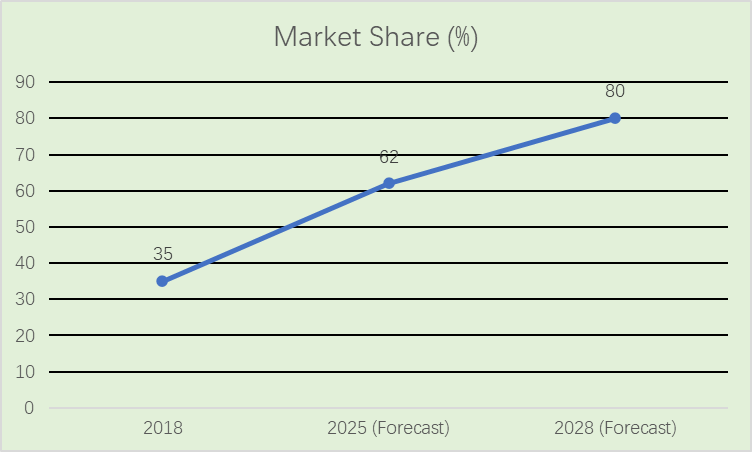
- Market Share Dynamics: According to 2025 forecast data from Guidechem and Grand View Research’s Global Flame-Retardant Plastics Market Report 2025, the global market share of halogen-free flame-retardant nylon for electrical and electronic applications has surged from 35% in 2018 to 62%, and is projected to surpass 80% by 2028. Halogenated flame retardants are only used in small quantities in low-value-added, non-export scenarios.
IV. Typical Application Cases in Electrical and Electronics: From Standards to Practice
The application of flame-retardant nylon in the electrical and electronic field requires "material selection based on needs." Suitable flame-retardant systems and UL94 grades should be selected according to the voltage level, temperature environment, and spatial dimensions of components. Below are three core application cases:
1. Connectors (High-Voltage/Micro): V-0 Grade + High CTI is Key
Application Requirements: High-voltage connectors for new energy vehicles (operating voltage 300-800V) must meet "flame-retardant V-0 grade, CTI > 600V, temperature resistance 120℃, and GWIT ≥ 775℃" to avoid leakage-induced fires; micro connectors for consumer electronics (e.g., USB-C interfaces) need to maintain V-0 grade at 0.4mm thin walls and be halogen-free and environmentally friendly, which requires custom development of special formulas combining nano-flame retardants and glass fiber reinforcement.
Material Selection Scheme: 30% glass fiber-reinforced PA66 featuring a halogen-free, phosphorus-nitrogen synergistic flame-retardant system (e.g., LANXESS Durethan DP BKV30FN01). It delivers UL94 V-0 flammability rating (0.8mm thickness), 600V CTI, 120MPa tensile strength, and sustained performance at temperatures up to 130℃.
Proven Performance Benefits: A leading automotive manufacturer’s adoption of this material reduced connector leakage failure rates from 0.5% to 0.03%. Moreover, the material complies with EU ECE R100 environmental standards, removing any compliance barriers for export markets.
2. Circuit Breaker Casings: Balancing Flame Retardancy and Impact Resistance
Application Requirements: Household circuit breaker casings must withstand instantaneous high temperatures (up to 1000℃) during short circuits, meet V-0 flame-retardant grade, have impact resistance (to prevent cracking during installation), and be halogen-free and low-smoke (to avoid endangering human bodies in fires).
Material Selection Scheme: Halogen-free flame-retardant PA6/PPO alloy (e.g., SABIC Noryl GTX964), UL94 V-0 grade (1.6mm thickness), Izod impact strength (notched) 8kJ/m², heat distortion temperature 125℃, and maximum smoke density (Dₘₐₓ) 100 during combustion (far lower than the industry average of 180).
Data Support: In GB 10963.1-2020 testing, circuit breaker casings made of this material showed no sustained combustion and no cracking after 10 impacts of 1000℃ flame, meeting household safety requirements.
3. Coil Bobbins: Dual Tests of Heat Resistance and Flame Retardancy
Application Requirements: Motor coil bobbins operate in high-temperature environments (120-150℃) for a long time and are in close contact with copper wires. They need to meet "flame-retardant grade V-1 or higher, temperature resistance 150℃, and good dimensional stability" to avoid coil short circuits caused by high-temperature softening.
Material Selection Scheme: Glass fiber-reinforced halogen-free flame-retardant PA46 (e.g., DSM Stanyl TW341), UL94 V-0 grade (1.6mm thickness), long-term service temperature 160℃, thermal shrinkage rate < 0.5% (under 23℃/50% RH conditions), and resistance to temperature fluctuations during motor operation.
Practical Effect: After a motor manufacturer used this material, the aging failure cycle of coil bobbins extended from 2000 hours to 5000 hours, the motor failure rate decreased by 60%, and it successfully entered the European market due to its halogen-free characteristics.
V. Summary: Material Selection Methodology for Flame-Retardant Nylon
The selection of flame-retardant nylon in the electrical and electronic industry should follow three principles: compliance first, performance matching, and cost balance:
- Compliance First: Prioritize halogen-free flame-retardant systems for export products to ensure compliance with RoHS, REACH, and other regulations; for domestic low-voltage scenarios (e.g., below 12V), halogenated flame retardants can be selected based on cost, but restricted halogenated varieties should be avoided.
- Performance Matching: High-voltage components (e.g., connectors, circuit breakers) require V-0 grade + high CTI (≥250V); for thin-walled components (e.g., microelectronic parts), confirm the "flame-retardant grade at actual thickness"; for high-temperature components (e.g., coil bobbins), add temperature resistance requirements (long-term service temperature > 120℃).
- Cost Balance: Non-critical components (e.g., low-power casings) can use halogen-free V-1 grade materials (15% lower cost than V-0 grade); for core components, prioritize performance to avoid "losing more for less."
As electrical and electronic products develop towards "miniaturization, high-voltage, and greenization," the technology of flame-retardant nylon will further upgrade towards "low addition amount, high temperature resistance, and multi-functional integration"—for example, the composite of nano-flame retardants and carbon fibers can simultaneously achieve V-0 grade flame retardancy, high strength, and high thermal conductivity, providing stronger support for the safety performance of next-generation electrical and electronic products.
Looking for a reliable wholesale custom manufacturer? We are a bulk factory providing tailored solutions for flame retardant nylon. Contact us today for the products mentioned in this article.