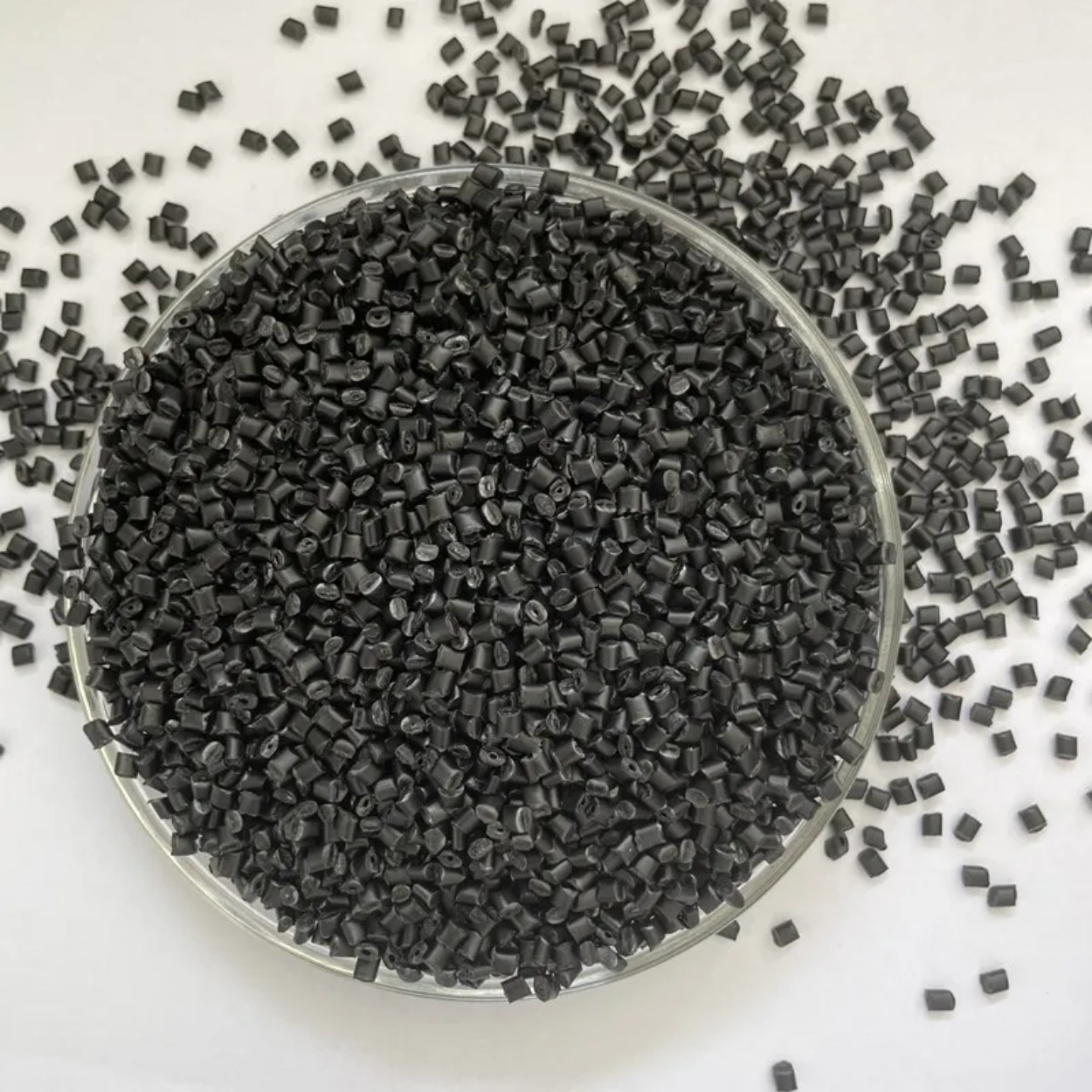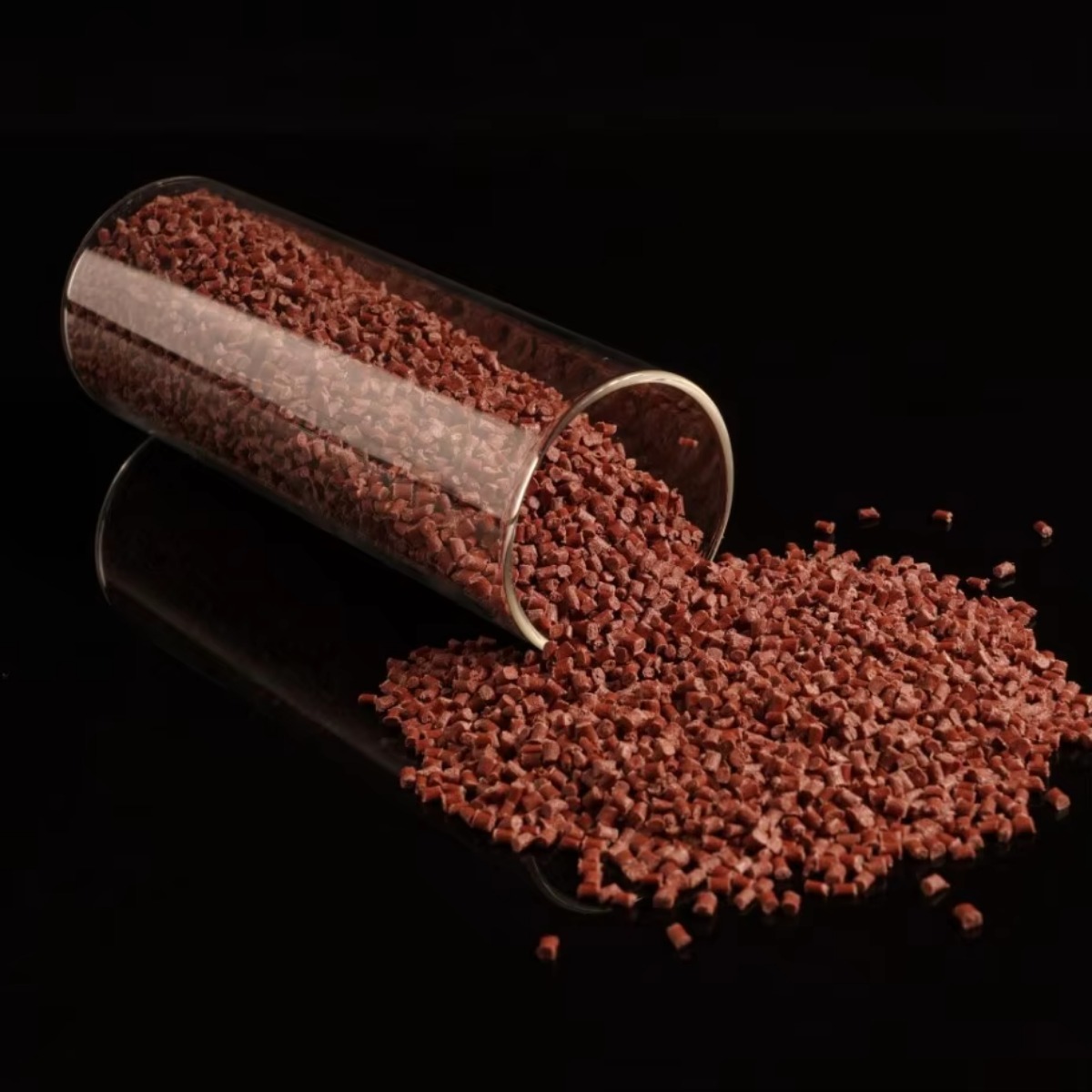
As a Core Member of the Modified Nylon Family

As a core member of the modified nylon family, glass fiber reinforced nylon (PA+GF) achieves a performance leap of "1+1>2" through melt blending of glass fiber (GF) and nylon resin (mainly PA6/PA66). The content of glass fiber directly determines the material's mechanical strength, heat resistance, and processing difficulty—from 15% "mild reinforcement" to 50% "heavy reinforcement", the material properties show a phased change pattern. Combining authoritative test data and visual charts, this article systematically analyzes the influence mechanism of glass fiber content on the key properties of PA+GF, and provides accurate material selection solutions covering consumer electronics to the automotive industry.
I. Core Cognition: Performance Enhancement Mechanism of Glass Fiber Reinforced Nylon
Nylon itself has good toughness, chemical resistance, and processing fluidity, but pure nylon has defects such as low tensile strength (about 55-65MPa for pure PA6, 70-80MPa for pure PA66), low heat distortion temperature (only 60-70℃ in dry state), and poor dimensional stability. The addition of glass fiber improves performance through two major mechanisms:
- Load Transfer Effect: As a "rigid skeleton", glass fiber can efficiently bear external stress and transfer it to the resin matrix, significantly improving the material's tensile and flexural resistance;
- Heat-resistant Stabilization Effect: The melting point of glass fiber (about 1450℃) is much higher than the melting temperature of nylon (about 220℃ for PA6, 260℃ for PA66). The formed fiber network can inhibit the thermal movement of resin molecular chains, significantly improving the heat distortion temperature and dimensional stability.
It should be noted that higher glass fiber content is not always better—when the content exceeds 40%, the material's toughness and processing fluidity will decrease sharply, and problems such as glass fiber exposure and product cracking are prone to occur. The following will take the most widely used PA66+GF as an example, combined with GB/T standard test data (sample specification: 127mm×12.7mm×3.2mm, dry environment), to quantitatively analyze the performance change law.
II. Data Visualization: Influence of Glass Fiber Content on Key Properties

The following table shows the core performance test data of PA66+GF with different glass fiber contents. The subsequent line charts will visually show the change trend (Note: Data is from the 2025 Modified Nylon Performance Report of Sinopec Beijing Research Institute of Chemical Industry).
| Glass Fiber Content (GF%) | Tensile Strength (MPa) | Flexural Modulus (GPa) | Heat Distortion Temperature (HDT, 1.82MPa) (℃) | Notched Impact Strength (kJ/m²) |
|---|---|---|---|---|
| 0% (Pure PA66) | 72 | 2.8 | 78 | 5.2 |
| 15% (PA66 GF 15) | 125 | 5.5 | 142 | 7.8 |
| 20% | 148 | 7.2 | 165 | 8.5 (Note: dry state data) |
| 30% (PA66 GF 30) | 186 (High-quality formulations >200MPa) | 10.8 | 208 | 9.2 (Peak value) |
| 40% | 212 | 13.5 | 240 | 6.8 |
| 50% (PA66 GF 50) | 235 | 16.2 | 255 | 4.5 |
1. Mechanical Properties: "Linear Rise Period" and "Plateau Period" of Strength and Modulus

The tensile strength and flexural modulus show the characteristic of "rapid growth first, then slowdown" with the increase of glass fiber content, which can be divided into three stages:
- Low Content Stage (15%-20%): Glass fibers are uniformly dispersed in the resin. The tensile strength increases from 125MPa to 148MPa (an increase of 18.4%), and the flexural modulus increases from 5.5GPa to 7.2GPa (an increase of 30.9%). The performance improvement efficiency is the highest at this stage;
- Medium Content Stage (20%-40%): Glass fibers form a preliminary network structure. The growth rate of tensile strength drops to 43.2% (148→212MPa), and the growth rate of flexural modulus drops to 87.5% (7.2→13.5GPa). The growth rate slows down but remains stable;
- High Content Stage (40%-50%): Excessive accumulation of glass fibers leads to insufficient resin wrapping in some areas. The tensile strength only increases by 10.8% (212→235MPa), and the flexural modulus increases by 20% (13.5→16.2GPa), entering the "plateau period".
2. Heat Resistance: "Stepwise Breakthrough" of Heat Distortion Temperature

Heat Distortion Temperature (HDT) is the core indicator of PA+GF heat resistance. It shows a "stepwise" increase with the increase of glass fiber content, which is closely related to the formation of glass fiber network:
When glass fiber content rises from 15% to 30%, the heat deflection temperature (HDT) surges from 142℃ to 208℃—a 46.5% increase. This is because 30% glass fiber content enables the formation of a continuous heat-resistant framework, which effectively resists thermal deformation under a pressure of 1.82 MPa. However, when glass fiber content exceeds 40%, the HDT growth rate decelerates significantly: at 50% content, HDT only climbs by 6.25% (from 240℃ to 255℃) compared with 40% content, indicating that the heat resistance enhancement effect of glass fiber has approached its upper limit at this stage. It should be noted that the HDT will decrease by 5%-10% in humid and hot environments, and a safety margin should be reserved for actual material selection.
3. Negative Effects: "Synchronous Attenuation" of Toughness and Processability
The rigid characteristics of glass fiber will lead to the decrease of material toughness and processing fluidity, which is particularly obvious in the high content stage:
- Toughness Change: The notched impact strength reaches the peak (9.2kJ/m²) at 30% glass fiber content, then drops sharply—dropping to 6.8kJ/m² at 40% (a decrease of 26.1%), and only 4.5kJ/m² at 50%, which is lower than that of pure PA66. At this time, the material is prone to brittle fracture;
- Processability Change: The melt flow rate (reflecting processing fluidity) decreases exponentially with the increase of glass fiber content. It is only 1.8g/10min at 50% glass fiber content, which is 12% of that at 15% content. To realize molding, it is necessary to increase the injection temperature (280-300℃) and pressure (120-150MPa), and the mold is easily worn.
III. Accurate Material Selection: Scenario-based Matching Scheme Based on Glass Fiber Content
The core of PA+GF material selection is the "balance between performance requirements and cost". Different glass fiber contents correspond to differentiated application scenarios. The following is a material selection guide for three major mainstream fields:
1. Consumer Electronics and Home Appliance Field: Low Content (15%-20%) as the Mainstream
This field requires materials to be "lightweight, easy to process, and balanced in strength". Most products are thin-walled parts (thickness 1-2mm), such as mobile phone middle frames, home appliance knobs, and connector housings.
Recommended Selection: PA66+15%GF (e.g., DuPont Zytel 101LGF15, dry state tensile strength about 120-130MPa) or PA6+20%GF (e.g., BASF B3EG6, dry state tensile strength about 85-95MPa).
Core Advantages: Tensile strength meets daily needs, HDT ≥ 140℃; melt flow rate ≥ 11g/10min, suitable for thin-walled injection molding, with high surface finish (Ra ≤ 0.8μm); cost is 15%-20% lower than 30%GF materials. It should be noted that the tensile strength of PA6-based materials will decrease by about 30% after moisture absorption, so PA66-based materials are preferred in humid environments.
Typical Case: The housing of a brand of sweeping robot adopts PA6+20%GF, which is 22% lighter than ABS materials, and its temperature resistance is increased to 165℃, which can withstand the high-temperature environment near the motor.
2. Industrial Machinery and Electrical Field: Medium Content (25%-30%) as the Mainstream
Products in this field need to bear a certain load and high temperature, such as gears, bearing seats, circuit breaker housings, and motor end covers, requiring "high strength, high heat resistance, and dimensional stability".
Recommended Selection: PA66+30%GF (e.g., LANXESS Durethan A3EG6).
Core Advantages: Tensile strength ≥ 180MPa, flexural modulus ≥ 10GPa, which can replace some die-cast aluminum alloys; HDT ≥ 200℃, meeting the long-term working environment of 120℃; notched impact strength ≥ 9kJ/m², avoiding brittle fracture caused by mechanical vibration.
Data Support: An industrial gear adopts PA66+30%GF, with a service life of 8000 hours, which is 3 times that of pure PA66 gears (2000 hours), and its weight is only 1/3 of that of steel gears, reducing equipment energy consumption.
3. Automotive and New Energy Field: Medium-High Content (35%-50%) Matched on Demand
The demand for PA+GF in the automotive field shows a polarization: structural parts require high rigidity, while flexible parts need to balance strength and toughness.
- High Content Scenario (40%-50%): For load-bearing components such as automotive chassis brackets and battery pack beams, PA66+45%GF (e.g., DSM Stanyl TE250F6) is recommended, with tensile strength ≥ 220MPa (up to 300MPa for high-end processes), flexural modulus ≥ 15GPa, and HDT ≥ 245℃, which can withstand impact and vibration during vehicle operation.
- Medium-High Content Scenario (35%-40%): For engine peripheral components (such as intake pipes and valve covers), PA6+35%GF (e.g., Mitsubishi Engineering 1013G35) is recommended (often compared to PA 6.6 GF 35 for higher thermal loads), with excellent oil resistance, which can work for a long time in 150℃ engine oil environment, and notched impact strength ≥ 7kJ/m², avoiding cracking caused by thermal cycle.
IV. Material Selection Pitfalls: Four Key Notes
- Do not blindly pursue high glass fiber content: If the product has no load-bearing requirements, using 50%GF materials will increase the cost by more than 30%, and the processing scrap rate will rise to 15% (only 3% for 15%GF);
- Pay attention to glass fiber dispersion: Glass fibers in low-quality modified materials are prone to agglomeration. Even if the content reaches 30%, the tensile strength may be lower than that of high-quality 20%GF materials. Mechanical property test reports should be requested when purchasing;
- Match processing equipment: When the glass fiber content exceeds 40%, it is necessary to use injection molding machine barrels and nozzles with hardening treatment (surface hardness ≥ HRC50), otherwise equipment wear will be caused;
- Consider environmental adaptability: In humid environments (such as sanitary ware and underwater equipment), PA6 has strong water absorption. PA66+GF should be preferred, and hydrolytic stabilizers should be added to avoid performance degradation.
V. Conclusion: The "Golden Balance Point" of Glass Fiber Content
The performance of PA+GF and glass fiber content present a "double-edged sword" effect: 15%-20% is the "golden range for cost and processability", 30% is the "balance range for strength and toughness", and above 40% is the "special range for extreme performance". Material selection should focus on "scenario requirements". Only by clarifying the load, temperature, and dimensional accuracy requirements of the product, and combining processing capabilities and cost budgets, can the most suitable glass fiber content scheme be found. In the future, with the development of nano-modification and glass fiber surface treatment technology, PA+GF will make breakthroughs in the direction of "maintaining toughness at high glass fiber content", further expanding its application boundaries.
Need High-Quality PA+GF Compounds?
We are a leading wholesale custom manufacturer offering a full range of glass fiber reinforced nylon solutions. Contact our bulk factory today for quotes on automotive grade and industrial PA6/PA66 compounds.