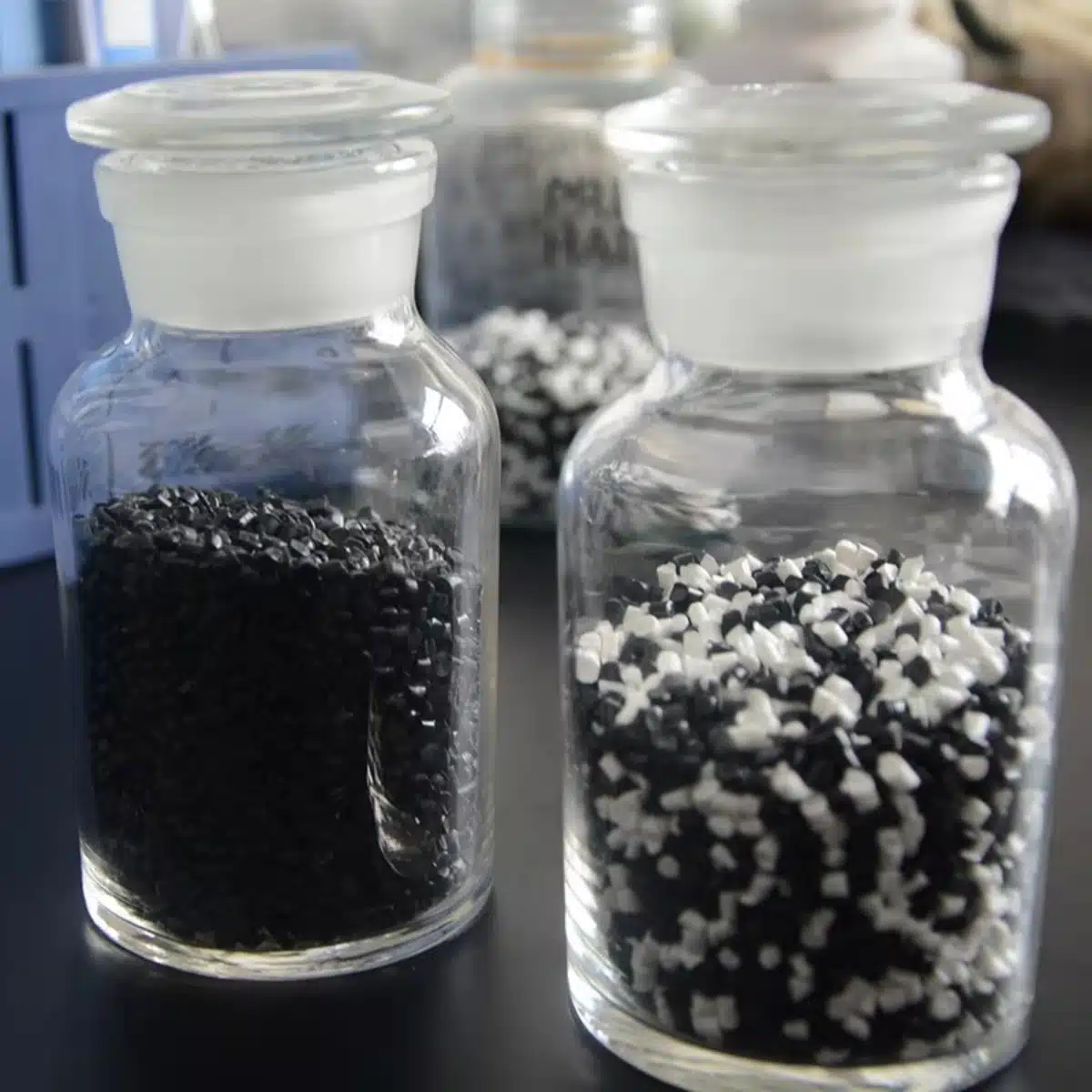
Glass Filled PA66 Granules for Structural Injection Molding
Glass filled PA66 granules are developed for injection-molded components that require higher stiffness, mechanical strength, heat resistance and dimensional stability than unreinforced nylon 66. Glass fiber reinforcement helps PA66 maintain structural performance under load and elevated temperatures, making it suitable for automotive, electrical, power-tool and industrial components.
Yongjuxing supplies glass fiber reinforced PA66 in different reinforcement levels for different structural requirements. Current grades include PA66 GF15, PA66 GF30, PA66 GF35 and functional reinforced formulations. The balance between glass fiber content, stiffness, impact performance, surface quality and processing can also be adjusted according to the molded part.
For applications that require lower processing temperatures or a different balance between performance and cost, compare our glass filled PA6 compounds. Where flame resistance is also required, see our nylon ignífugo range.
Available Glass Filled PA66 Grades
The appropriate glass filled PA66 grade depends on the structural load, operating temperature, surface requirement and dimensional tolerance of the part. Higher glass fiber content generally increases stiffness and dimensional stability, while lower reinforcement levels can provide easier processing and better surface appearance.
| Grade |
Glass Fiber Content |
Rendimiento típico |
Recommended Selection |
| PA66 GF15 |
15% |
Tensile strength: 140 MPa
Flexural modulus: 7000 MPa
HDT: 225°C |
General structural housings, appliance parts and molded components requiring moderate reinforcement and better surface quality |
| PA66 GF30 |
30% |
Tensile strength: 180 MPa
Flexural modulus: 8500 MPa
HDT: 235°C |
Automotive, electrical and industrial components requiring a balanced combination of strength, stiffness and heat resistance |
| PA66 GF35 |
35% |
Tensile strength: 180 MPa
Flexural modulus: 8500 MPa
HDT: 240°C |
Higher-rigidity structural parts, power-tool components, fan blades and heat-resistant housings |
| Functional Reinforced PA66 |
According to grade |
Reinforcement combined with flame-retardant, hybrid-fiber or other functional modification |
Electrical, automotive and industrial parts requiring both structural reinforcement and additional functional performance |
The values above represent current glass filled nylon 66 grades and should not be treated as specifications for every formulation. Final properties depend on reinforcement level, additives, color and application-specific modification. Request the corresponding TDS before final material approval.
How to Choose PA66 GF15, PA66 GF30 and PA66 GF35
PA66 GF15 – Moderate Reinforcement
PA66 GF15 is suitable when the molded component needs greater rigidity and heat resistance than unreinforced PA66 but does not require maximum reinforcement. The lower glass fiber content can provide a better balance between structural performance, processing and surface appearance.
- Suitable for general housings, appliance components and industrial parts.
- Useful where visible surface quality is more important than maximum stiffness.
- Provides lower reinforcement than PA66 GF30 or GF35 while still improving dimensional stability.
PA66 GF30 – Balanced Structural Grade
PA66 GF30 is one of the most practical glass filled PA66 granules for structural injection molding. With 30% glass fiber reinforcement, it provides a strong balance of tensile strength, rigidity, heat resistance and dimensional stability.
- Suitable for automotive structural parts and housings.
- Used for electrical and electronic structural components.
- Applicable to power-tool and machinery components exposed to mechanical load.
- Can also be combined with flame-retardant or other functional modification when required.
PA66 GF35 – Higher Rigidity and Heat Performance
PA66 GF35 can be evaluated when higher reinforcement and thermal performance are more important than surface appearance or flexibility. It is particularly suitable for structural parts that must maintain shape and rigidity under elevated temperatures.
- Power-tool structural housings
- Fan blades and motor-related components
- Load-bearing industrial parts
- Heat-resistant structural components
How Glass Fiber Content Changes PA66 Performance
Selecting glass fiber reinforced PA66 is not simply a matter of choosing the highest glass fiber percentage. Increasing reinforcement changes mechanical performance, processing behavior and molded-part appearance at the same time.
| Property |
General Effect as Glass Fiber Content Increases |
Selection Consideration |
| Resistencia a la tracción |
Generally increases |
Useful for load-bearing structural parts |
| Stiffness |
Increases |
Reduces deformation under mechanical load |
| Estabilidad dimensional |
Improves |
Important for tight-tolerance molded components |
| Creep Resistance |
Improves |
Useful for parts under long-term mechanical load |
| Mold Shrinkage |
Generally decreases |
Can improve dimensional control but fiber orientation must be considered |
| Surface Appearance |
May become more difficult to control |
Lower-GF grades may be preferable for visible surfaces |
| Impact Flexibility |
Depends on reinforcement and formulation |
Toughening may be required where impact loading is important |
| Equipment Wear |
Increases |
Higher-GF materials require attention to screws, barrels and mold surfaces |
If impact resistance is more important than maximum rigidity, a toughened PA66 compound may provide a better balance for the application.
PA66 GF30 vs. PA6 GF30
PA66 GF30 and PA6 GF30 are both widely used glass fiber reinforced polyamides, but they are not interchangeable in every application. The selection should be based on operating temperature, structural requirements, processing conditions and material cost.
| Selection Factor |
PA66 GF30 |
PA6 GF30 |
| High-Temperature Performance |
Generally preferred for higher-temperature structural applications |
Suitable for many general structural applications |
| Temperatura de procesado |
Higher |
Lower |
| Structural Rigidity |
Well suited to demanding structural components |
Provides a good balance of stiffness and processability |
| Processing |
Requires careful drying and higher melt temperature |
Generally processed at lower temperatures |
| Typical Selection |
Higher-temperature automotive, electrical and industrial parts |
General automotive, machinery and electrical structural parts |
Choose glass filled PA66 granules when higher thermal capability and structural rigidity are important. If the application does not require the higher-temperature performance of PA66, compare our glass filled PA6 grades before final material selection.
Injection Molding Guidelines for Glass Filled PA66
PA66 is hygroscopic and should be properly dried before injection molding. Moisture can affect surface quality, mechanical performance and process stability. The exact processing window depends on the selected reinforced polyamide 66 grade and glass fiber content.
For the current PA66 GF30 grade, typical reference processing conditions include:
- Drying temperature: 80–120°C
- Drying time: 2–6 hours
- Melt temperature: 270–300°C
- Nozzle temperature: 280–300°C
- Mold temperature: 80–120°C
When processing higher glass fiber levels, mold design, gate position and fiber orientation should also be considered because these factors can influence warpage, weld-line strength and dimensional stability. Wear-resistant screws, barrels and mold components may also be required for long-term production with highly reinforced PA66.
Functional Glass Filled PA66 Options
Not every application can be solved by increasing glass fiber content alone. Functional glass filled nylon 66 grades can combine reinforcement with additional performance requirements.
- Flame-Retardant PA66 GF30: suitable for reinforced electrical and electronic components requiring both structural performance and flame resistance. See flame retardant nylon compounds.
- Hybrid GF/CF Reinforced PA66: selected for applications requiring higher stiffness, dimensional stability or a different mechanical balance. See nylon reforzado con fibra de carbono.
- Custom Stabilized PA66: heat stabilization, UV resistance, color and other functional packages can be evaluated according to the operating environment.
Custom Glass Filled PA66 Granules
Yongjuxing can adjust glass filled PA66 granules according to the mechanical, thermal and processing requirements of the molded part. Instead of selecting a material based only on GF percentage, the formulation can be matched to the complete performance target.
- Glass fiber content
- Tensile strength and stiffness
- Impact and rigidity balance
- Heat stabilization
- UV and weather resistance
- Flame-retardant requirements
- Flow characteristics
- Mold shrinkage and dimensional stability
- Color and surface requirements
- Hybrid glass-fiber and carbon-fiber reinforcement
For grade matching, send your current material TDS, required glass fiber percentage, application, operating temperature, mechanical requirements and monthly consumption. Contact Yongjuxing to discuss a suitable glass fiber reinforced PA66 grade or request material for injection-molding trials.