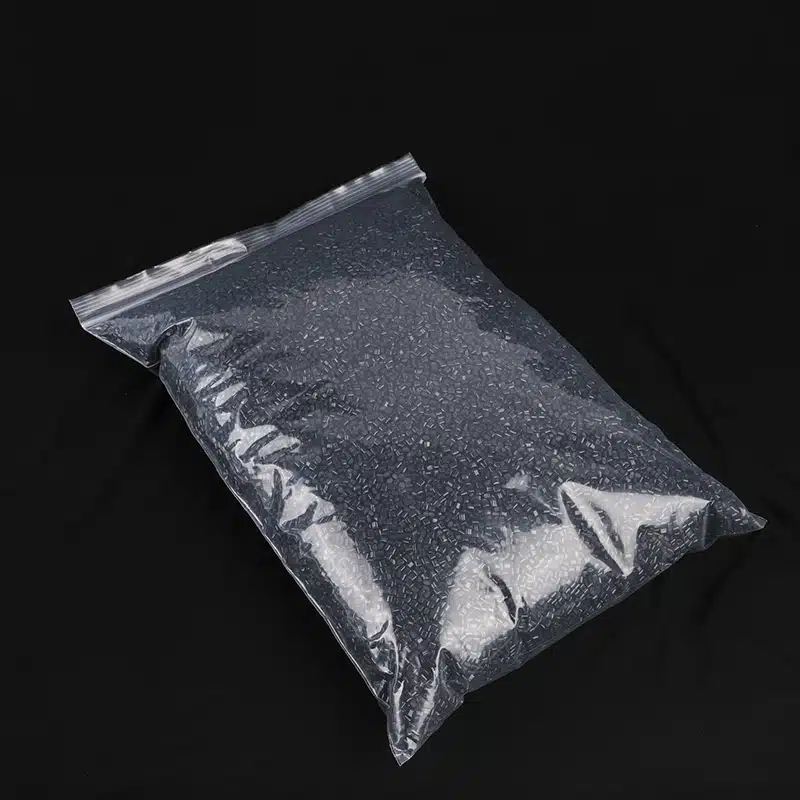
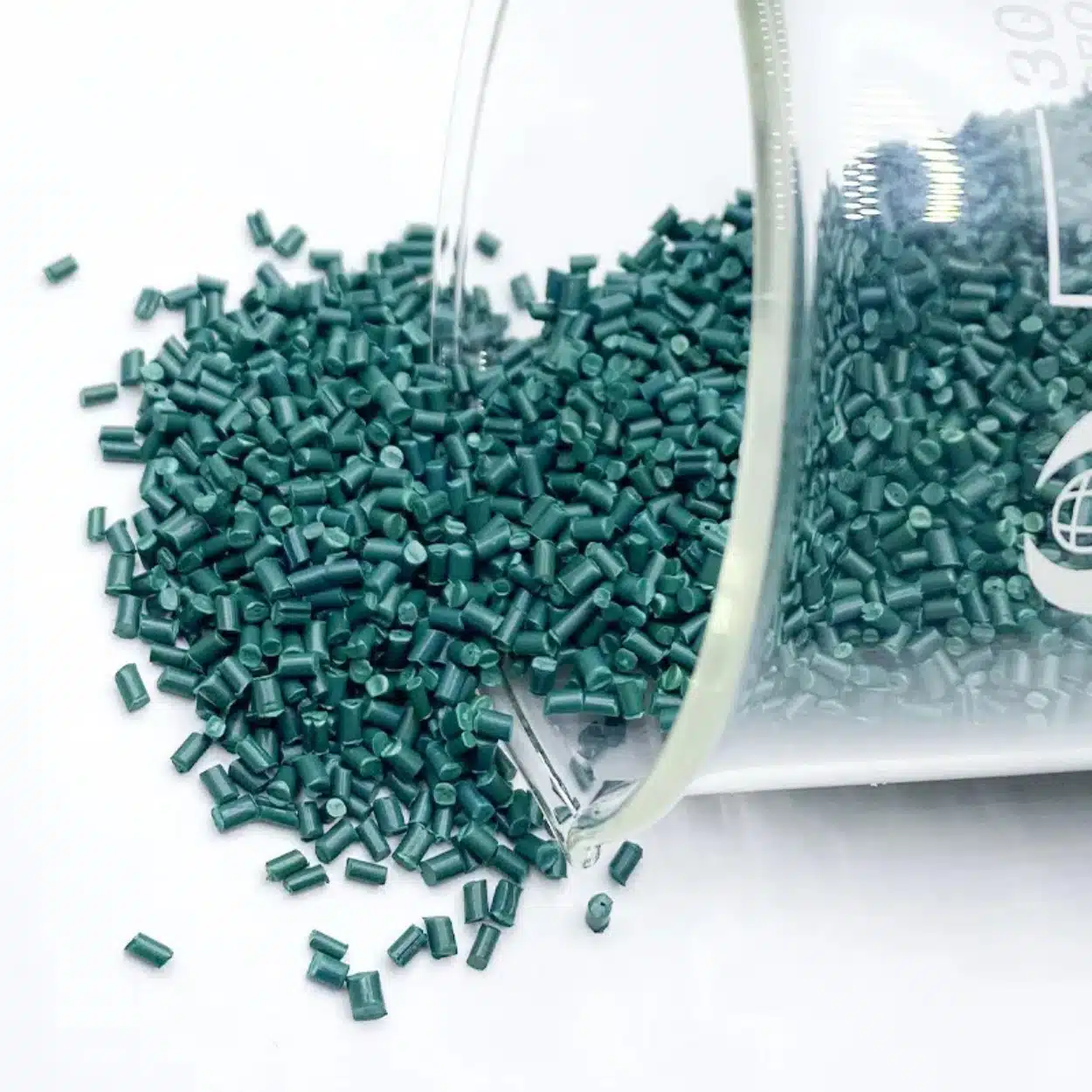
Boasting excellent mechanical properties, wear resistance, lightweight advantage, and processability, nylon (Polyamide, PA)—a key member of the five major engineering plastics—has secured a vital role in modern industry. Yet, its inherent limitations prevent it from meeting the requirements of more rigorous applications. Consequently, "modification" technologies have emerged, tailoring nylon materials to meet various stringent working conditions through precise molecular design and material compounding.

I. Basic Chemical Knowledge of Nylon (PA)
1. Core Definition and Molecular Structure
Chemical Nature
A category of polymers defined by repeating amide linkages in their main chains, nylon—chemically designated as polyamide (PA)—owes its distinctive properties to the molecular mechanism underpinned by these linkages’ strong polarity and hydrogen-bonding potential.
Synthesis Method
Produced primarily through the polycondensation of amino and carboxyl groups, nylon has a general molecular formula expressed as [-NH-R-CO-]ₙ.
Main Types:
- Caprolactam undergoes ring-opening polymerization to form PA6—and its structural unit has 6 carbon atoms, end of story.
- What about PA66? You just mix hexamethylenediamine and adipic acid, let ’em go through polycondensation, and that’s it; its structural unit is made of two 6-carbon bits. (For a detailed breakdown, read our guide on PA6 vs PA66 differences).
- And those other common types—PA11, PA12, PA46, PA612? See those numbers in their names? They just tell you how many carbon atoms are in each of their monomers.
2. Core Chemical Properties and Their Effects
Amide linkages and hydrogen bonding are the real key to how nylon acts. The amide groups on its molecular chains form strong intermolecular hydrogen bonds—these work like physical cross-links, letting the material have two big key traits.
- High Mechanical Strength: This tight hydrogen bonding makes nylon’s molecular chains hard to break.
- High Crystallinity Tendency: Regular molecular chains drive crystalline region formation, which further enhances the material’s strength.
- High Hygroscopicity: Amide groups’ polar nature confers hydrophilicity, allowing nylon to readily associate with water molecules.
II. Why Modify Nylon?
Although pure nylon has excellent properties, its three inherent flaws are critical pain points in precision industries:
1. High Water Absorption – The Source of Dimensional and Performance Instability
Root Cause: Polar amide groups easily adsorb water molecules.
Effects:
- Poor Dimensional Stability: When nylon soaks up water, it swells up—and its dimensions can change by as much as 0.5% to 1.0%. That’s terrible news for precision parts like gears or electronic connectors.
- Performance Fluctuation: Absorbed water acts as a plasticizer, causing a significant decrease in tensile strength, stiffness, and heat deflection temperature, while impact toughness and ductility increase. This makes product performance highly dependent on environmental humidity, difficult to control.
2. Insufficient Heat Resistance – The Key Bottleneck Limiting High-Temperature Use
Characterized by a relatively low Heat Deflection Temperature (HDT), pure nylon presents notable application limitations. Take dry PA6 as an example: its HDT ranges from 60 to 80°C but drops drastically to 40–50°C upon moisture absorption.
This performance flaw rules out its use in high-temperature scenarios, including automotive engine compartments (sustained temperature 100–150°C) and electronic/electrical equipment interiors (operating temperature 80–120°C), as parts would suffer softening, deformation, or functional failure under such conditions.
3. Functional Limitations – Inability to Meet Complex Needs
- Poor Flame Retardancy: Pure nylon’s Limiting Oxygen Index (LOI) is only around 20%—that’s super low. It’s flammable by nature, and when it burns, it drips molten plastic that makes the fire spread even more. These problems mean it can’t be used in electronics or transportation stuff that has to meet safety standards like UL94 V-0 or other similar rules.
- Insufficient Low-Temperature Toughness: Once temperatures drop to -20°C or below, pure nylon goes brittle and gets really easy to snap. That’s why it’s terrible at standing up to any kind of impact.
- Lack of Special Functions: Plain old pure nylon doesn’t have any of the handy special features we need at all—stuff like antistatic properties, electrical conductivity, electromagnetic shielding, or high thermal conductivity. It’s got nothing in that department.
The Core Purpose of Modification: To specifically compensate for the above shortcomings and endow it with new functions through physical or chemical methods, thereby "enhancing strengths and avoiding weaknesses," and expanding the application boundaries of nylon.
III. Main Nylon Modification Methods and Product Series
Modification is a precise "material formulation science". Here are four of the core modification technologies.

1. Reinforcement Modification – The Foundation of Strength and Heat Resistance
Method: Melt-blending nylon resin with high-modulus reinforcing fibers (mainly Glass Fiber or Carbon Fiber) via twin-screw extrusion and pelletizing. The fibers act like "rebar" in the nylon matrix.
Modifiers:
- Glass Fiber (GF): Most common, cost-effective, significantly improves strength, stiffness, and heat resistance.
- Carbon Fiber (CF): A higher-performance reinforcement, lighter and stronger than GF, also imparting conductivity and thermal conductivity to the material.
Product Series and Performance:
- PA6 + 30% GF: Tensile strength increases from ~70 MPa to over 150 MPa; HDT increases from ~60°C to over 200°C. Check our PA6 Glass Filled series for applications in automotive engine components and power tool housings.
- PA66 + 50% GF: Offers higher heat resistance and strength. For specialized high-strength needs, we also manufacture precise formulations like PA66 30% GF and PA66 GF35, widely used in automotive structural parts and mechanical gearboxes.
- PA66 + 30% CF: Combines high strength, high stiffness, and conductivity. Used in new energy vehicle battery housings, UAV fuselages, high-precision robotic arms.
2. Flame Retardant Modification – The Safety Guardian
Method: Just mix flame retardants into the nylon. These additives work their fireproof magic through things like heat absorption cooling, cutting off oxygen supply, and stopping the spread of combustion radicals. See our Flame Retardant Nylon solutions for more details.
Flame Retardant Systems:
- Halogen-Free Systems: Mainstream trend for environmental reasons.
- Red Phosphorus Based: Efficient, but limits product color (often red/black).
- Nitrogen-Phosphorus Based: Environmentally friendly, better color compatibility.
- Inorganic Hydroxides: e.g., Magnesium Hydroxide, environmentally friendly but require high loadings, affecting mechanical properties more.
- Halogen-Containing Systems: High efficiency, but facing environmental regulation restrictions.
Product Series and Performance:
- PA66 + 15% Red Phosphorus: Can achieve UL94 V-0 rating (at 0.8mm), LOI >30%. Used in charging pile modules, circuit breaker housings.
- PA6 + 25% Nitrogen-Phosphorus Flame Retardant: Halogen-free, environmentally friendly, achieves UL94 V-0, colorable. Used in laptop housings, internal appliance parts.
3. Toughening Modification – The Impact Resistant Option
Method: Just mix nylon with elastomers. The elastomers will break down into tiny micron-sized particles spread throughout the nylon base, which can absorb impact energy and stop cracks from spreading further. Our PA6 Toughened grades are specifically engineered for this purpose.
Toughening Agents:
- POE-g-MAH, EPDM-g-MAH: These are the reactive tougheners we use most often. The maleic anhydride groups on their ends react with the amine groups on the nylon’s ends, creating a really strong bond at the interface between the two materials.
- TPE, SBS, etc.
Product Series and Performance:
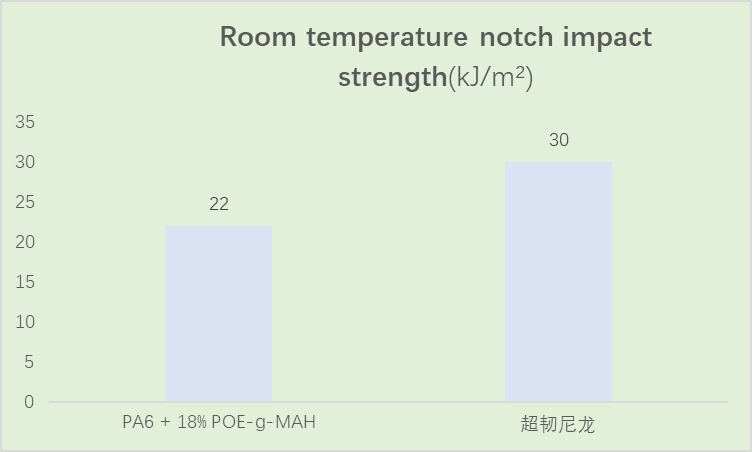
- PA6 + 15-20% POE-g-MAH: Notched Izod impact strength at room temperature can increase from ~5 kJ/m² to over 20 kJ/m²; low-temperature impact strength at -30°C is also greatly improved. Used in sports equipment, automotive pedals, power tool housings requiring drop resistance.
- Super-Tough Nylon: Through special toughening and compatibilization technologies, super-tough nylon with impact strength approaching or exceeding that of Polycarbonate can be produced. Used in automotive bumpers, chainsaw housings, etc.
4. Wear-Resistant Modification – Low Friction, Long Life
Method: Adding lubricants or hard particles to reduce the coefficient of friction or increase surface hardness.
Modifiers:
- Lubricants: PTFE, Molybdenum Disulfide (MoS₂), Graphite, forming a lubricating film on the surface.
- Hard Particles: Silicone Oil, Silicon Carbide, increasing surface hardness and wear resistance.
Product Series and Performance:
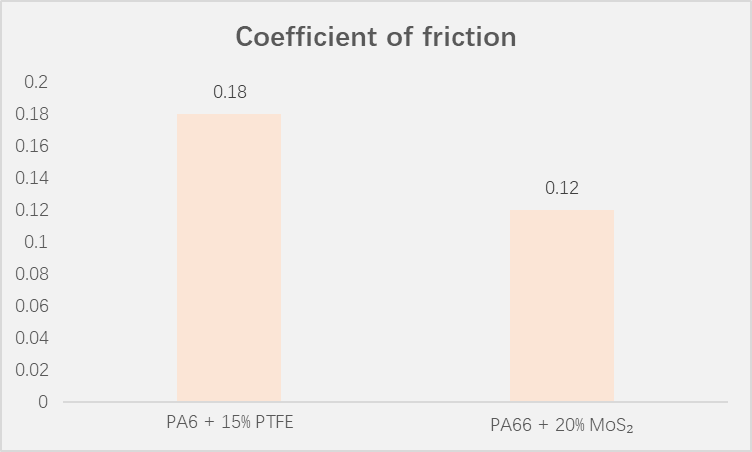
- PA6 + 15% PTFE: Coefficient of friction can be reduced from 0.3-0.4 to 0.15-0.20; wear resistance is greatly improved. Used in oil-free bearings, gears, slides.
- PA66 + 20% MoS₂: Particularly suitable for low-speed, high-load conditions, with a service life several times that of pure nylon. Also, for applications requiring electrical management alongside durability, consider our Conductive & Anti-static Nylon.
Summary
Nylon modification technologies, through precise "material formulations," have transformed a plastic with excellent base properties into a material family capable of meeting the diverse needs of industry. From high-strength structural parts to safe flame-retardant components, from low-temperature resistant tough parts to long-life wear-resistant parts, modified nylon continues to drive innovation in high-end manufacturing such as automotive, electronics, and aerospace. In the future, modification technologies will trend more towards multi-functionality, high performance, and green environmental protection, providing stronger material support for industrial progress.
Looking for a Reliable Modified Nylon Partner?
We are a wholesale custom manufacturer specializing in high-performance PA compounds. Contact our factory today for a bulk solution tailored to your specific needs, including PA66 Toughened and reinforced grades.