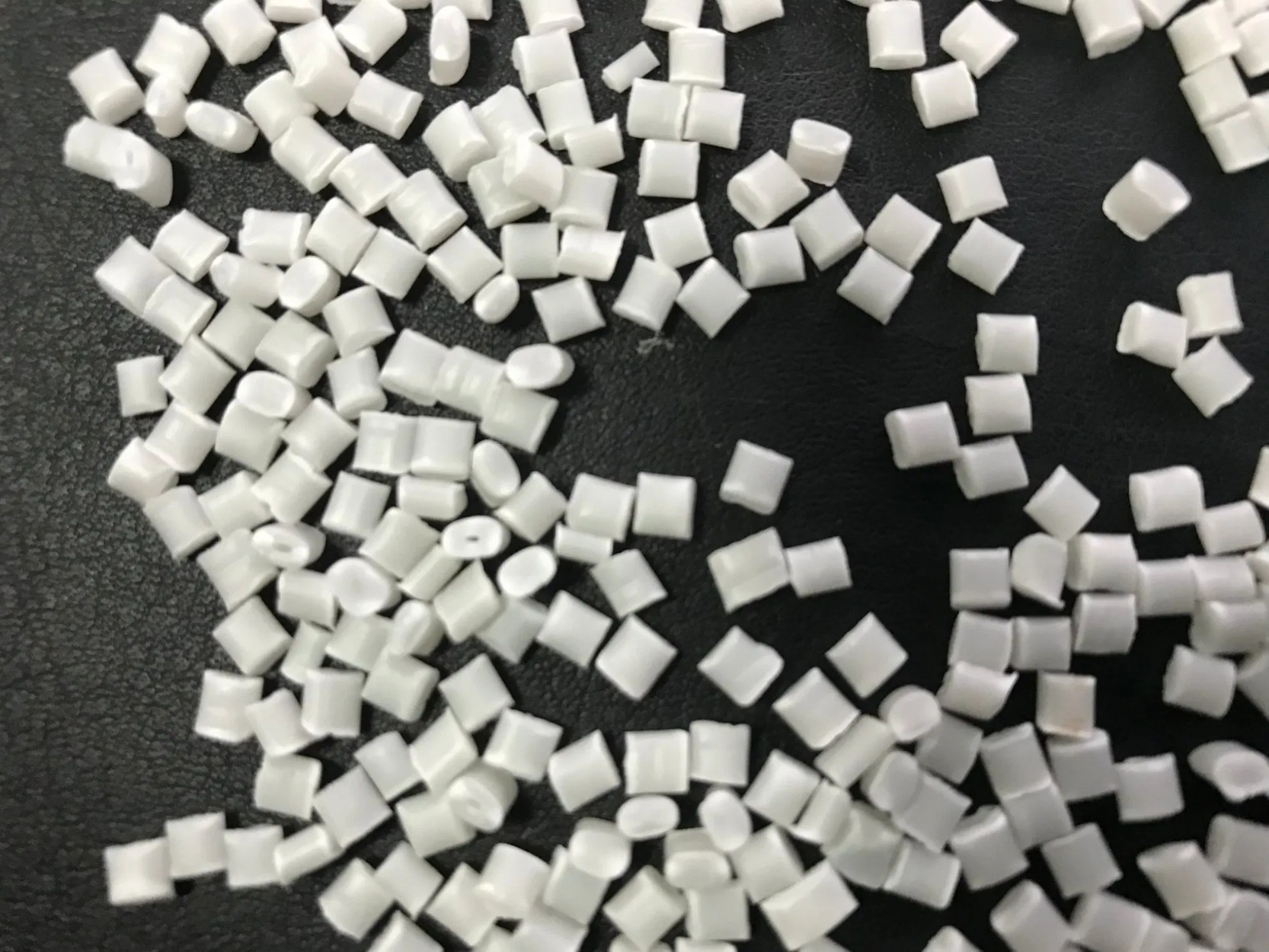
Nylon (Polyamide, PA) is a widely used engineering plastic that boasts excellent properties such as high strength and wear resistance. However, due to the amide bonds in its molecular structure, it is highly hygroscopic, easily absorbing moisture from the air. This characteristic often leads to issues like warping, silver streaks, and black spots during the injection molding process. To help you quickly identify and resolve these problems, we have compiled the following professional solutions based on years of after-sales technical experience, aiming to improve your production efficiency and part quality.
Core Understanding: The Relationship Between Hygroscopicity and Nylon Injection Molding Troubleshooting
The amide groups in nylon are highly hydrophilic. Under standard conditions (23℃, 50% relative humidity), the equilibrium moisture absorption rates of different nylon grades are as follows: PA6 ≈ 3.5%, PA66 ≈ 2.5%, and PA12 ≈ 0.8% (data compliant with GB/T 1034-2008 Plastics - Determination of Water Absorption).
Two critical changes occur in moisture-absorbed nylon during processing: reduced melt viscosity from weakened intermolecular forces causes injection molding fluidity issues, and moisture vaporization/decomposition in the high-temperature barrel damages molecular chains and generates bubbles. These changes are the core causes of warping, silver streaks, and black spots. Therefore, moisture control is the primary prerequisite for resolving nylon injection molding issues.

Common Problems: Cause Analysis and Targeted Solutions
Optimizing Temperature and Pressure to Prevent Warping in Parts
Warping is one of the most typical issues with nylon parts. It essentially results from uneven internal stress distribution in the part, leading to inconsistent shrinkage after cooling and subsequent shape distortion. This problem is common in long, thin-walled parts or those with reinforcing ribs.

1. Core Causes
- Material Factors: Moisture absorption disrupts the molten state of nylon, leading to irregular molecular orientation during the filling stage. If nylon is not adequately dried, moisture evaporation post-injection molding will trigger "delayed shrinkage", which further exacerbates part warping.
- Processing Factors: Excessively high injection speeds exert forced stretching on molecular chains, inhibiting their relaxation and recovery. Insufficient holding pressure or shortened holding time fails to fully densify the internal structure of molded parts, resulting in uneven shrinkage. Meanwhile, excessively high barrel temperatures can induce molecular degradation of nylon, compromising material strength and increasing susceptibility to deformation.
- Mold Design Factors: Uneven mold temperature distribution causes disparate cooling rates across different sections of the part. Improper gate positioning leads to asymmetric melt filling paths and concentrated molecular orientation. Inadequate draft angles will necessitate forced demolding, which introduces external stress and ultimately causes part deformation.
2. After-Sales Solutions
- Prioritize Moisture Control: Stabilize Material Condition from the Source
- Drying Process Specifications: PA6/PA66 requires a hot air circulation dryer, with a drying temperature of 80-100℃ and a drying time of 4-6 hours; PA12 requires a drying temperature of 60-80℃ and a drying time of 3-4 hours (in line with the recommended process in ISO 1110-2015). The dried material should be used immediately; if exposed to air for more than 30 minutes, it needs to be re-dried (exposure for 1 hour results in a moisture absorption of approximately 0.1%, which is sufficient to cause problems).
- Hopper Moisture Prevention: It is recommended to install a constant-temperature moisture-proof device on the injection molding machine hopper, maintaining the hopper temperature at 50-60℃ to prevent secondary moisture absorption.
- Optimize Process Parameters: Balance Stress and Shrinkage
- Injection Parameters: Reduce the injection speed by 20%-30% and adopt a "slow-fast-slow" staged injection method (e.g., for thin-walled parts: first stage - low speed to fill near the gate, second stage - medium speed to fill the cavity completely, third stage - low speed for holding pressure) to reduce molecular orientation stress; lower the barrel temperature by 10-20℃ (the typical temperature range is 230-250℃ for PA6 and 250-270℃ for PA66, with reference to GB/T 17037.1-2019) to avoid material degradation.
- Holding Pressures and Cooling: Increase the holding pressure to 60%-80% of the injection pressure, and extend the holding time until the part weight stabilizes (usually 20% longer than that for ordinary plastics); maintain the mold temperature at 60-90℃ (recommended 70-80℃ for PA6 and 80-90℃ for PA66), and use uniformly distributed cooling channels to ensure that the temperature difference of cooling rates across different parts of the part does not exceed 5℃.
- Mold Adjustment: Adapt to Material Characteristics
- Correct Draft Angle: Adjust according to the part wall thickness - for a wall thickness of 1-3mm, the draft angle should be ≥1.5°; for 3-5mm, it should be ≥2° to avoid stress caused by forced demolding.
- Optimize Gates and Runners: Adopt fan gates or disk gates (for large-area parts) to ensure uniform filling; increase the runner diameter by 10%-15% compared with that for ordinary plastics to reduce flow resistance.
Solving Moisture-Related Issues (Silver Streaks) on Part Surface
Silver streaks typically appear as silvery-white filamentous stripes distributed along the filling direction on the part surface, and may be accompanied by tiny bubbles in severe cases. They essentially result from gas (moisture vapor or air) failing to be discharged in a timely manner during injection molding, which becomes trapped on the surface as the melt cools.

1. Core Causes
- Material Factors: The primary culprit is excessive moisture content. When nylon isn't dried thoroughly (moisture > 0.1%), the water turns into steam in the high-temperature barrel, creating gas bubbles that stretch into silver streaks on the part surface.
- Process Factors: Melt temperature too high causes material degradation gas; Injection speed too fast creates excessive shear heat and trapped air; Back pressure too low allows air to enter the melt.
- Mold Factors: Poor venting prevents gas escape; Gate positions that cause jetting or turbulent flow can trap air; Cold slugs blocking runners can also disturb the flow and create surface defects.
2. After-Sales Solutions
- Strengthen Drying: Completely Remove Moisture
- Drying Effect Verification: Use the "weight method" for verification (in accordance with GB/T 6284-2016 General Method for Determination of Moisture Content in Chemical Products - Loss on Drying Method); the weight change of dried nylon pellets should be ≤0.05%. Alternatively, place a small amount of pellets on a hot plate at 260℃ - if no bubbles are generated, the drying is qualified.
- Special Case Handling: For moisture-absorbed nylon regrind, extend the drying time to 8-10 hours and increase the drying temperature by 5-10℃ to ensure complete moisture evaporation.
- Process and Mold Vent Optimization
- Process Adjustment: Reduce the injection speed by 15%-20%, extend the delay time before holding pressure (0.5-1 second) to allow gas discharge, and lower the front barrel temperature by 10℃ to reduce the moisture vaporization rate.
- Mold Venting: Add vents at the end of the cavity and weld line positions, with a vent width of 5-10mm and depth of 0.03-0.05mm; for complex cavities, "insert gap venting" (gap: 0.02-0.03mm) can be adopted.
- Equipment Inspection: Prevent Air Entrainment
- Hopper Inspection: Ensure tight sealing at the connection between the hopper and the barrel, and install a dust-proof and moisture-proof cover; promptly clean any accumulated material near the barrel feed inlet to avoid gas generation due to material retention and degradation.
- Nozzle Maintenance: Check the fit gap between the nozzle and the mold sprue bushing to ensure tight sealing and prevent air from entering the melt runner.
Black Spots on Part Surface - "Direct Manifestation" of Contamination and Degradation
Black spots are one of the most appearance-impacting issues in nylon parts, usually presenting as black or dark brown spots. They mainly stem from material contamination, equipment residue, or material degradation, and require a full-process solution covering "source control, in-process cleaning, and process optimization."

1. Core Causes
- Contamination Factors: Impurities (such as dust, oil stains, and other plastic pellets) mixed into nylon pellets during storage and transportation; insufficient cleaning of the hopper and feeding pipes, leading to residual materials of other colors or contaminants.
- Degradation Factors: Over-high barrel temperature or prolonged material residence time in the barrel (exceeding 10 minutes) causes thermal degradation of nylon molecular chains, forming black carbides; insufficiently dried nylon undergoes hydrolytic degradation at high temperature, generating black impurities.
- Equipment Residue Problems: Mold cavities and runners often harbor oil stains or burnt residues, while carbon deposits can build up on the inner walls of barrels and nozzles. These contaminants are easily carried into the mold cavity by the flowing melt during production.
2. Source Control Tips: Keep Materials Clean
- Pellet Storage: Use dry, clean, sealed containers to keep oil and dust out. Store different batches/types of nylon separately—no mixing allowed.
- Pre-Feeding Checks: Screen pellets carefully to remove impurities first. For regrind: dry and crush alone to avoid foreign matter contamination.
3. Equipment Cleaning: Get Rid of Residues & Carbon Deposits
- Barrel Cleaning: Before switching nylon materials, purge with PP/PE 3–5 times to clear leftover materials. For carbon deposits: use a dedicated cleaning compound (e.g., glass fiber-reinforced type) for cyclic cleaning; disassemble for manual cleaning if needed.
- Mold & Nozzle Cleaning: Take molds apart regularly, wipe cavities/runners with alcohol or special cleaner. Clean burnt material from nozzles, and check nozzle heating coils for proper operation—this stops local overheating and material degradation.
4. Process Optimization: Prevent Material Degradation
- Temperature Control: Strictly control the barrel temperature - not exceeding 260℃ for PA6 and 280℃ for PA66 - to avoid prolonged exposure to high temperatures; lower the barrel temperature to 150-180℃ during shutdown to prevent material degradation due to residence.
Settings for High-Quality Surface Finish (Troubleshooting Summary)
| Defect | Primary Cause | Quick Solution |
|---|---|---|
| Warping | Uneven Stress & Cooling | Lower injection speed ("slow-fast-slow"), optimize mold temp (70-90°C). |
| Silver Streaks | Moisture & Gas Trapped | Dry material thoroughly (80-100°C), check vents, reduce injection speed. |
| Black Spots | Contamination/Degradation | Clean barrel/nozzle, check for impurities, lower barrel temp (<280°C). |
After-Sales Support: Exclusive Technical Assistance and Troubleshooting
If you still encounter problems after implementing the above solutions, or face special situations with complex parts, please feel free to contact our after-sales technical team. We can provide the following exclusive support:
- On-site inspection of equipment, molds, and production processes, and formulation of customized solutions;
- Assistance in the verification and optimization of material drying processes;
- Quality inspection and problem tracing services for mass-produced parts.
Your smooth production and part quality are our core priorities. We look forward to working with you to solve various injection molding challenges and jointly improve production efficiency.
As a leading wholesale custom manufacturer, we provide complete bulk factory solutions for your production needs. Contact us today for premium PA66 GF30 and PA66 GF35 products.