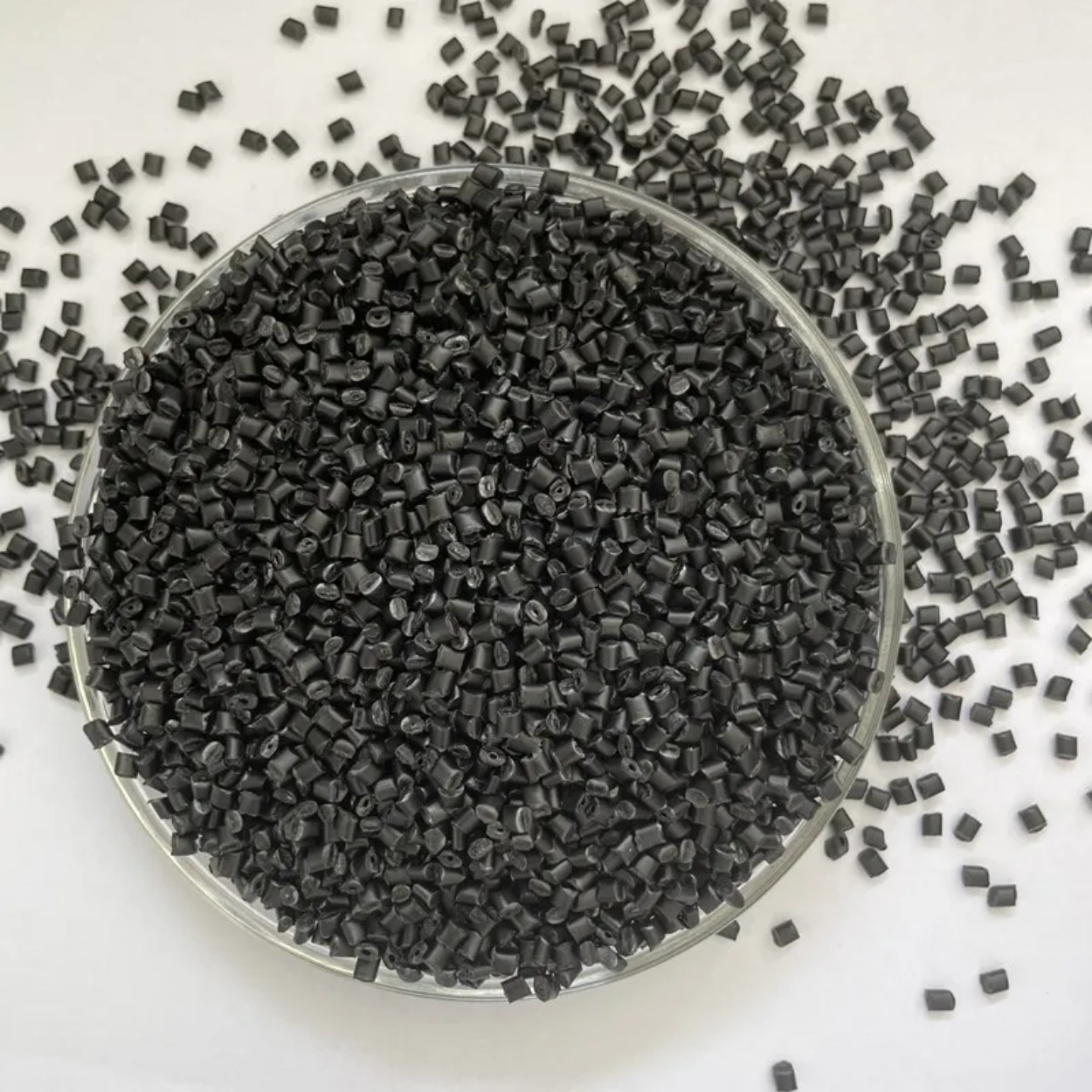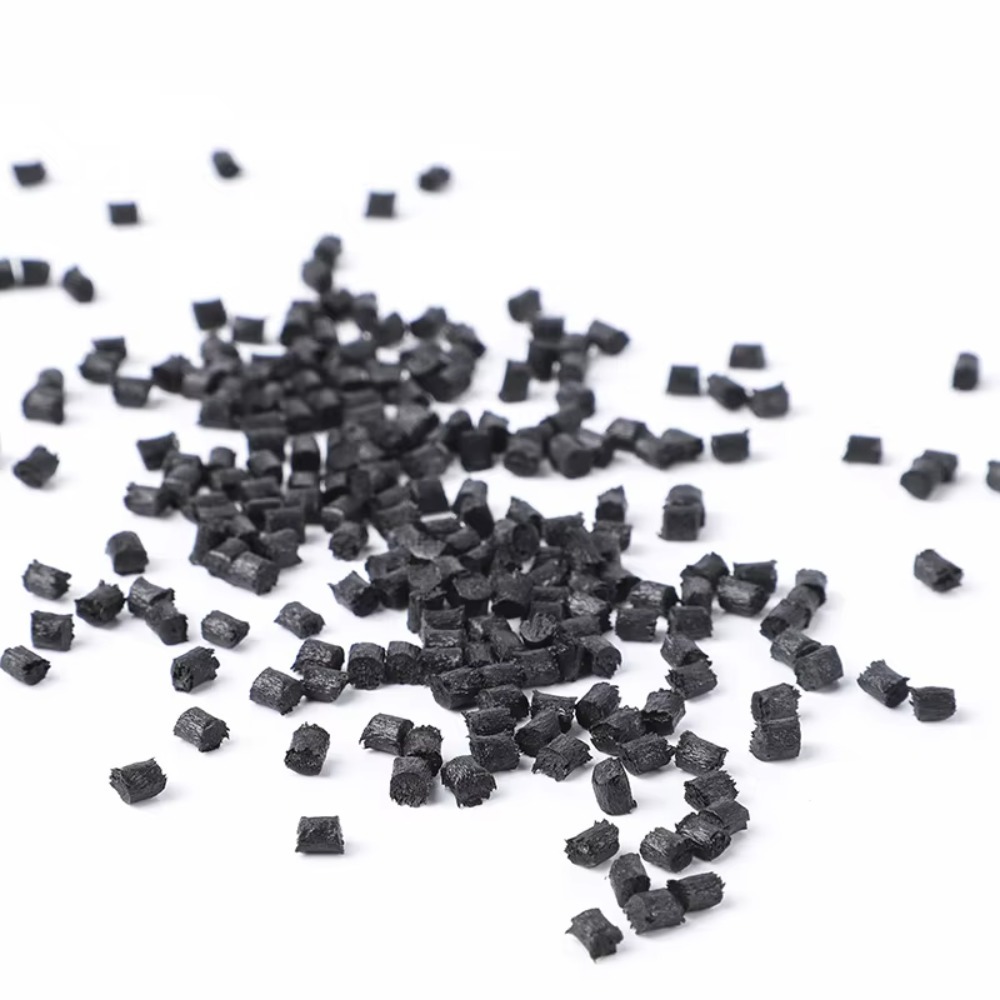
Driven by the dual goals of global "carbon peaking and carbon neutrality" and the electrification transformation of the automotive industry, automotive lightweighting materials have become a key path for the sector to enhance its core competitiveness. As the most widely used polymer material in the automotive field, modified nylon, leveraging its inherent advantages of "light weight and high strength" and continuously evolving technical performance, is gradually breaking the application monopoly of traditional metal materials such as die-cast aluminum. It has realized large-scale substitution in key components like intake manifolds and engine covers, propelling the automotive industry into a new era of lightweighting characterized by "plastic replacing steel".
The Evolution of Automotive Lightweighting Materials: Replacing Metal with Modified Nylon
The demand for "lightweight and high-strength" materials in the automotive industry is not a one-dimensional technical choice, but an inevitable outcome of the combined effects of policies and regulations, market demands, and industrial upgrading.

Core Demand Drivers for Lightweighting
1. Policy Compliance Impetus: Rigid Constraints from Energy Conservation and Emission Reduction Regulations
Increasingly stringent global carbon emission and fuel consumption standards have established clear quantitative targets for automotive lightweighting. China’s Technology Roadmap 2.0 for Energy-Saving and New Energy Vehicles explicitly stipulates that by 2025, the lightweight coefficient of fuel-powered passenger vehicles shall be reduced by 10%, while that of battery electric passenger vehicles shall be cut by 15%. By 2035, the lightweight coefficients of these two types of vehicles should be reduced by 25% and 35% respectively.

From the perspective of energy consumption correlation, authoritative industry data shows that for every 10% reduction in vehicle weight, the fuel consumption per 100 kilometers can be decreased by 6%-8%, and the driving range of pure electric vehicles can be increased by 5%-6%. This data directly drives automakers to take lightweighting as a core measure to reduce energy consumption and meet regulatory requirements, while material upgrading is the most direct technical path to achieve this goal.
2. Market Demand Upgrading: Range Anxiety and Cost Pain Points of New Energy Vehicles
For new energy vehicles, lightweighting holds even more prominent strategic significance. According to a Roland Berger survey, range anxiety remains the primary concern for consumers when purchasing electric vehicles, and battery costs account for 30%-40% of the total vehicle cost. By replacing metals with lightweight materials, every 100kg reduction in weight can reduce battery costs by 20% and extend the driving range. This logic of "weight reduction equals efficiency enhancement" directly addresses market pain points.
3. Industrial Upgrading Needs: Optimizing Manufacturing Efficiency and Whole-Life Cycle Costs
Traditional metal materials are plagued by drawbacks during processing, including high mold investment costs, prolonged forming cycles, and cumbersome assembly procedures. In contrast, polymer materials like modified nylon possess the advantage of integrated molding, which can reduce the number of components and assembly steps, significantly improving production efficiency. Data shows that for front subframe assemblies using nylon composite materials, mold investment is reduced by 40%, assembly processes by 60%, and the whole-life cycle cost is 18% lower than that of aluminum alloy solutions.
Nylon vs. Die-Cast Aluminum: Weight & Cost Analysis
Through modification technologies such as glass fiber reinforcement and nano-compositing, modified nylon has achieved breakthroughs in key indicators such as strength and heat resistance. Especially in core components like intake manifolds, engine covers, and fan blades, the performance gap between modified nylon and die-cast aluminum is gradually narrowing, while modified nylon has formed significant advantages in terms of weight and cost.

Case Studies: Intake Manifolds and Engine Covers
Case 1: Intake Manifold – Dual Breakthroughs in Lightweighting and Power Enhancement
As a core component of the engine intake system, the intake manifold must simultaneously meet the requirements of lightweighting, air tightness, and high-temperature resistance. It was once monopolized by die-cast aluminum for a long time. With the technological maturity of 30%-35% glass fiber-reinforced nylon 6/66, specifically high-performance grades like PA66 GF30 and PA66 GF35, it has become the mainstream material for this component.
| Comparison Dimension | Modified Nylon (Glass Fiber Reinforced) | Die-Cast Aluminum (6061 Alloy) | Advantage Conclusion |
|---|---|---|---|
| Weight | Density: 1.2-1.5g/cm³, Single component weight: 1.2-1.5kg | Density: 2.7g/cm³, Single component weight: Approximately 2.5kg | Weight reduction of 30%-50%, directly reducing engine load |
| Cost | Material unit price: 35-45 RMB/kg, Comprehensive cost reduced by 20%-35% | Material unit price: 18-22 RMB/kg, but high processing fee and mold investment | Lower whole-life cycle cost, especially suitable for large-scale production |
| Molding Flexibility | Can realize complex runner design, Inner wall smoothness ≤ Ra0.8μm | Machining required after casting, Inner wall smoothness only Ra1.6-3.2μm | Optimizes intake efficiency, increasing engine power by 3%-5% |
| Performance | Tensile strength: 60-80MPa, Long-term temperature resistance: 120-150℃ | Tensile strength: 70-110MPa, Thermal conductivity: 200W/m·K | Meets engine operating conditions, better vibration damping performance |
Case 2: Engine Cover – Balancing Structural Strength and Manufacturing Efficiency
The engine cover must withstand high temperatures and oil contamination, while possessing a certain structural strength. Traditionally, it was mostly made of die-cast aluminum. In recent years, high-temperature resistant PA66 Glass Filled alloys have achieved stable application in this field through mineral filling modification.
| Comparison Dimension | Modified Nylon (Mineral Filled) | Die-Cast Aluminum (A380 Alloy) | Advantage Conclusion |
|---|---|---|---|
| Weight | Density: 1.4-1.6g/cm³, Single cover weight: 0.8-1.0kg | Density: 2.7g/cm³, Single cover weight: 1.8-2.2kg | Weight reduction of 45%-55%, contributing to vehicle lightweighting |
| Cost | Mold investment reduced by 40%, Molding cycl


Nylon Injection Molding Troubleshooting: Prevent Warping & Silver StreaksNylon (Polyamide, PA) is a widely used engineering plastic that boasts excellent properties such as high strength and wear resistance. 
What Is Modified Nylon? A Complete Guide to Types & ApplicationsBoasting excellent mechanical properties, wear resistance, lightweight advantage, and processability, nylon (Polyamide, PA)—a key member of the five major engineering 
How to Choose a Modified Nylon Manufacturer: 5 Critical CriteriaIn the industrial manufacturing chain, the quality of modified nylon directly determines the performance and market competitiveness of end products. 
PA66 GF 30 Properties Guide: Comparing GF15, GF30, GF50As a Core Member of the Modified Nylon Family High-quality glass fiber reinforced PA66 granules ready for precision molding. As 
Flame Retardant Nylon UL94 Guide: Standards & Electronic SafetyAmid the rapid development of the electrical and electronic industry, from micro connectors to large circuit breakers, and from consumer 
Recycled Nylon Sustainability: Performance vs Virgin MaterialAmid the in-depth advancement of global “dual carbon” goals and increasingly stringent environmental regulations, green manufacturing has become the core
How to Choose a Modified Nylon Manufacturer: 5 Critical CriteriaIn the industrial manufacturing chain, the quality of modified nylon directly determines the performance and market competitiveness of end products.
Nylon Injection Molding Troubleshooting: Prevent Warping & Silver StreaksNylon (Polyamide, PA) is a widely used engineering plastic that boasts excellent properties such as high strength and wear resistance. |